life
[Book Review] More Than Ghost Stories — A Dark Horse History of Japan: Yūrei: The Japanese Ghost
This is a review of Yūrei: The Japanese Ghost by Zack Davisson. In the book, Davisson thoroughly explores the relationship between yūrei — those fantastical spectral beings — and Japanese history, culture, art history, and politics, transforming “ghost stories” into something much richer than mere ghost stories.
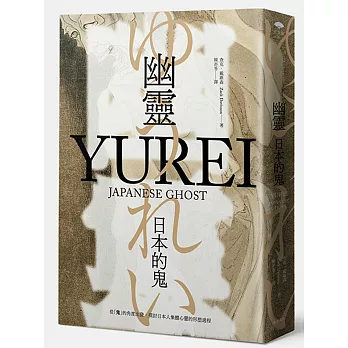 Yūrei: The Japanese Ghost, Zack Davisson, Walkers Cultural (image source: Books.com.tw)
A Ghost… I Live in a Haunted Apartment…
Honestly, I originally bought this book just to hit a discount threshold — I figured it’d be a fun collection of folklore and spooky ghost stories. I had absolutely no idea it would turn out to be such a dark horse. I devoured it in one sitting. The content blew me away completely.
From the title Yūrei: The Japanese Ghost, you’d expect a book centered on Japanese ghosts — and it is — but not in the way I imagined. I thought it would just string together stories about Hanako-san, Okiku, and the like. Instead, it weaves ghost lore together with modern Japanese art history, politics, and culture to create something that’s simultaneously scholarly and entertaining. If you want to understand modern Japanese art and literature, this is a wonderful and genuinely original entry point.
I assumed a book about Japanese culture would be written by a Japanese author — but Zack Davisson is actually an American who’s deeply passionate about Japanese folklore and ghost stories. He’s probably best known for translating Shigeru Mizuki’s GeGeGe no Kitarō, and he also served as a researcher and host on the National Geographic special Japan: The Lost Ghosts of Okinawa (seriously, how much does this guy love ghosts?).
Though the book is layered with historical context and every section is carefully researched, Davisson doesn’t slack on the storytelling either. The very first sentence of the book is:
I live in a haunted apartment.
And then he starts describing red handprints on his ceiling. Of course you’re going to keep reading XDDD
Each chapter ends with a hook that flows perfectly into the next, making the structure feel seamless. And the stories mentioned throughout the book can all be found in full at the back.
Before the Stories, Let’s Get the Terms Right
Similar concepts across different cultures can be surprisingly hard to translate — and “yūrei” is no exception. Sometimes people render it as “Japanese Ghost” so Western readers understand it’s a type of spirit. But in Western pop culture, “ghost” tends to call up images like Casper, or someone in a white sheet at Halloween, or maybe a decaying corpse-like figure.
 When Westerners hear “Ghost,” Casper is probably the first image that comes to mind.
But if you look at the English title of the book, you’ll notice it uses the Japanese romanization “Yurei” rather than “Japanese Ghost” — a deliberate choice by the author to signal to Western readers that yūrei are a deeply local, cultural phenomenon.
In Davisson’s telling, yūrei operate by specific rules and follow particular conventions. Their appearance carries meaning. And these ghosts aren’t just religious or spiritual entities — they’ve penetrated deeply into Japanese daily life and history.
A Ghost Culture Woven Through Japanese Life
I love how he ends the book:
Like that old telephone game, each retelling of the vampire legend adds a little here, a little there, until the creature on the screen is no longer terrifying, no longer causing people to exhume their dead relatives, cut off their heads, and brew their long-dead hearts into tea to avoid haunting in the dark.
But yūrei have steadfastly withstood the test of time, refusing to bow to trends and fashions. This persistent unchanging nature lends yūrei their credibility and reality. …
The cultural authenticity of yūrei ensures their relevance to the Japanese people. Dracula and the werewolf are obviously fictional. But yūrei are real. And reality is always scarier than fiction.
I never imagined that something as supernatural as “ghosts” could be connected to modern Japanese history, political transitions, the printing press, literary movements, and so much more. Through Davisson’s lens, yūrei are ultimately a reflection of the collective shaping of the Japanese psyche.
(Note: if you’re interested in Japanese supernatural folklore, urban legends, and the Japanese mindset, the In/Spectre series is a great companion — available as manga, novel, and anime.)
While I was reading, I kept sharing excerpts on Facebook with friends — because who expects a book about ghosts to contain a discussion of movable type printing? And that’s just the start. Here are some of the topics I never imagined I’d find in this book:
- Erotic cinema and yūrei
- The brain’s putamen, insula, and the emotional roots of yūrei’s love and hate
- Jiandeng xinhua and the creation of the yūrei tradition
- How yūrei changed after Japan’s Westernization
- Freud’s sexuality, love, and the famous yūrei Oiwa
- The evolution of ghost stories: from folklore to rakugo, kabuki, bunraku, and literary fiction
- How ghost stories climbed from lowbrow to highbrow Japanese literature
I’ll avoid spoilers, but this is genuinely a one-of-a-kind book. Highly recommended for fans of ghosts, horror, urban legends, or modern Japanese cultural history — you’ll come away with things you never expected to know XD
Title: Yūrei: The Japanese Ghost
Author: Zack Davisson
Translator: Chen Yi-ling
Publisher: Walkers Cultural
Thanks for reading :D
If you enjoyed this post, feel free to click the coffee button in the lower right to support us and give Lottery a can 🐾
Comments