Surviving Academic Writing in English – Phrasebanks, Thesauruses, Grammar Checkers, and Editing Services (Updated 2023/01/20: Wordvice 10% discount link)
A guide from someone who struggled with academic English writing — covering content strategy, paper structure, Academic Phrasebank, synonyms, collocations, grammar checkers like Grammarly, and manuscript editing services.
English Academic Writing Is Hard…
From four years of undergrad through three years of a master’s program — seven years total — I barely touched any English-language texts, let alone read or wrote academic papers in English. So starting a PhD in linguistics was a real shock to the system. Not only were all the assigned readings in English, but eventually I had to write and publish in English too. I spent an enormous amount of time grinding through that.
What might take classmates an hour to read or three days to write, it took me three hours to read and a week to cobble together.
It was genuinely exhausting. Besides consulting my senior labmates and taking academic writing courses at school, I also found a lot of self-study and online resources along the way. Today I want to share what I’ve learned from using these tools.
I’ve been sitting on this post for a long time, but now I finally feel confident enough to write it — because a paper I wrote entirely from scratch, using only the resources in this post, has been accepted for publication in a solid academic journal (not SSCI, but it’s listed as a top-tier journal in our department). And the first round of review came back as “Minor Revision,” with the editor’s comment: “I found the paper to be interesting and insightful, and particularly well written.” T_T
So here we go. I hope this helps — and please share your own resources in the comments!
Paper Content
Content is where I really can’t offer much — that’s entirely your domain as a researcher. XD
But if you’re as unfamiliar with academic English writing as I was, reading good papers is genuinely one of the best ways to learn. Beyond the classics from well-known scholars in your field, top-tier journals are full of excellent models. Try asking yourself: What’s the paper’s central argument? What research methods does it use? How is the paper organized? How does it present its contribution to the field?
I used to try to pack too many arguments into a single paper, and eventually realized that approach not only wasn’t efficient — it actually made it harder to say anything clearly. Learning how to structure your thinking is part of writing.
Before I write, I almost always use Notion to map out my arguments, take reading notes, and organize my materials. If you’re curious, here’s an intro:
Notion: A Cross-Platform Note App for Research, Résumés, and Travel Planning
Language Switching “Degrades the Resolution”
Early on, my supervisor kept telling me: “When you talk about this, it’s compelling — but when you write it down, it comes out too simple. A lot is getting lost.”
I noticed it too. It felt like switching from Chinese to English was compressing everything — like losing image quality in a photo.
After some reflection, I think what was happening was that I was trying to write directly in English, but my vocabulary wasn’t there yet, and I wasn’t used to English sentence patterns. The result was repetitive phrasing and ideas that came out shallow.
Because none of that problem existed when I was thinking and articulating in Chinese, the bottleneck was clearly my English proficiency. So I changed my approach:
Draft in Chinese first. Once the content is solid, convert it to English.
I know many writing instructors don’t recommend this, since English and Chinese writing have very different internal logic — and I’m not suggesting everyone do it my way. But it worked for me, with one important prerequisite:
You need to already be familiar with the logic and structure of academic writing in English.
The other downside of this method is that it’s slow. You’re essentially writing everything twice, and the conversion stage involves significant reworking. But I could express my ideas much more precisely. Before, I was losing about 70% of the nuance; now it’s closer to 30% — which felt like real progress. XD
Structure of an Academic Paper
The structure of academic papers in English is quite different from Chinese ones, and the transition took me a while. That said, once you know the conventions, academic writing is actually fairly formulaic — which makes it easier in some ways.
If you’re going the Chinese-first route like me, you need a strong grasp of English paper structure before you start, so your Chinese draft can follow that structure and the rewrite goes faster.
Key things to understand: what sections a complete paper includes, and what each section should accomplish.
When I took a course at NTU, we used Academic Writing for Graduate Students: Essential Tasks and Skills — quite useful. But there are also tons of free resources online, including YouTube tutorials.
Once you have the concept down, grab a few good papers in your field and analyze how they’re written. Before you start drafting, sketching out your paper’s full structure by hand and then discussing it with your supervisor or senior labmates can save you a lot of pain later.
Academic Phrasebank
Once your content is solid, I strongly recommend this resource:
Academic Phrasebank
This site compiles common sentence patterns used in papers for different rhetorical purposes and tones — a go-to reference while writing.
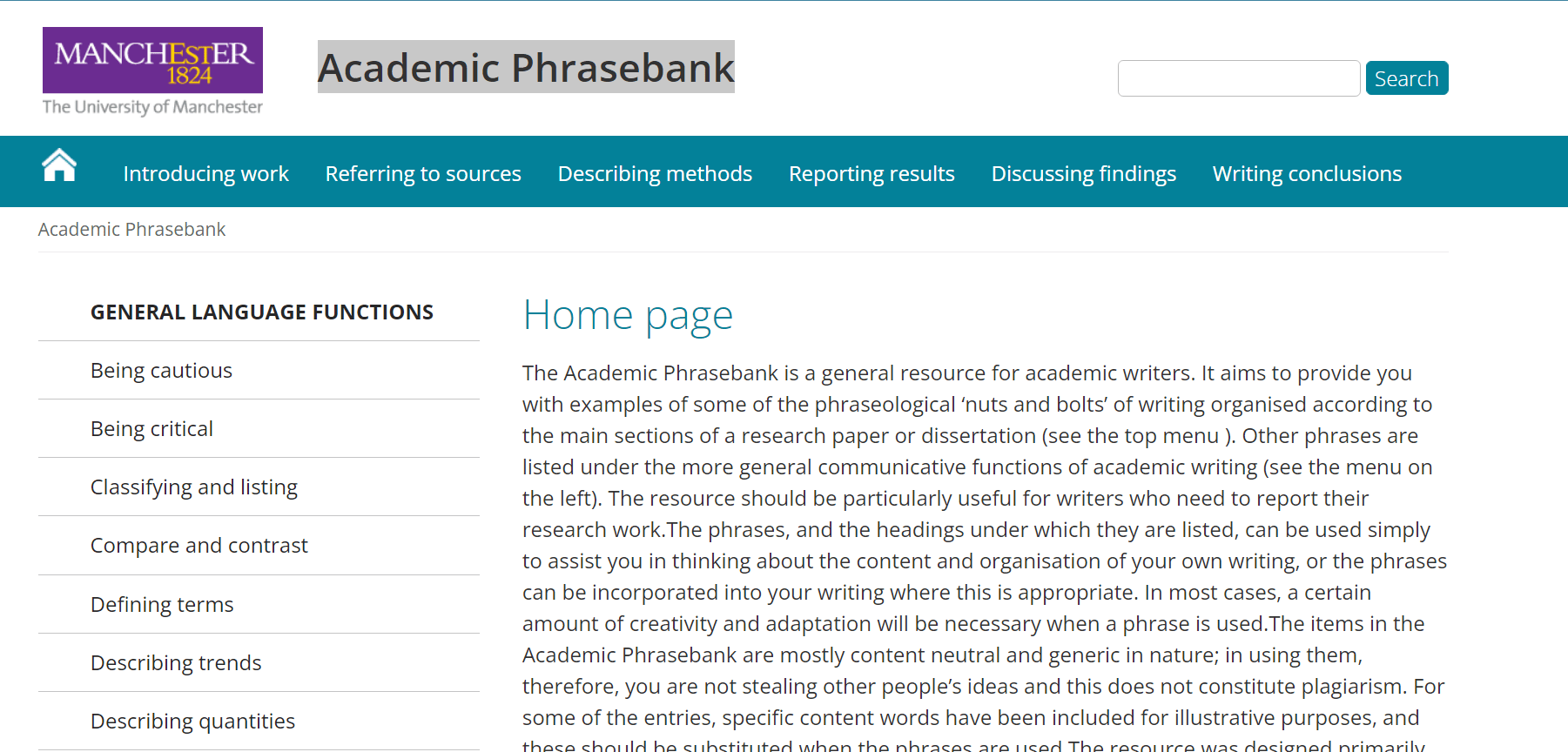
If you have a specific purpose in mind — say, introducing your paper or writing a conclusion — check the horizontal links at the top, which cover:
- Introducing work
- Referring to sources
- Describing methods
- Reporting results
- Discussing findings
- Writing conclusions
If you’re looking for phrases for a more critical tone, or you’re about to define a term, use the vertical links on the left:
- Being cautious
- Being critical
- Classifying and listing
- Compare and contrast
- Defining terms
- Describing trends
- Describing quantities
- Explaining causality
- Giving examples
- Signaling transition
- Writing about the past
For example, if I need to introduce an important term — one that’s either new to the paper or needs redefinition — I’d go to “Defining terms.” It first explains the rhetorical purpose of defining, then gives you a set of recommended sentence patterns like this:
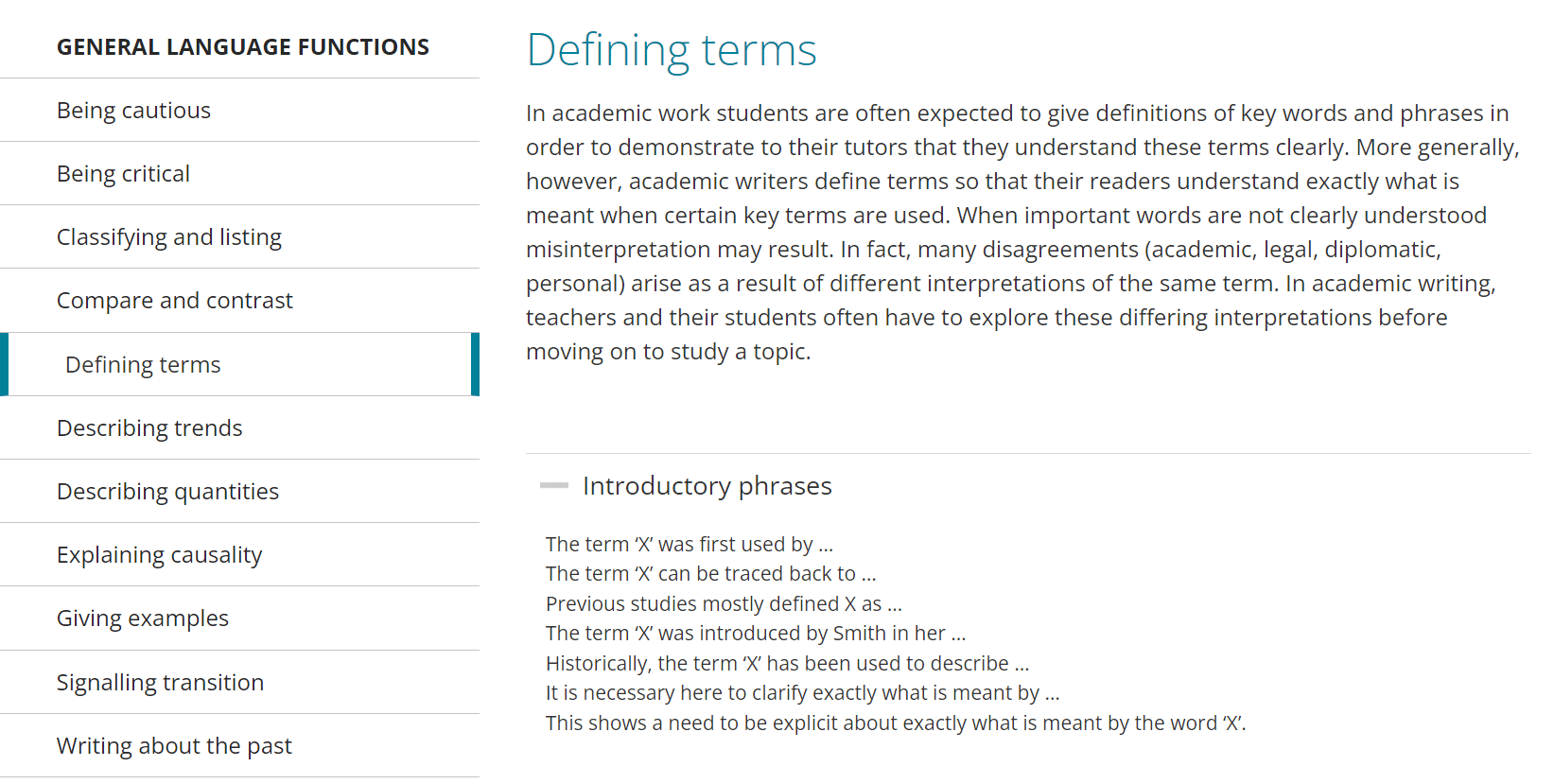
No more agonizing over how to introduce something. Incredibly useful.
Synonyms – Thesaurus
If you’re a Friends fan, you definitely remember Joey and his Thesaurus. XD
Jokes aside, a thesaurus is genuinely invaluable — especially when your vocabulary runs dry. :’)
My go-to:
https://www.thesaurus.com/
Just type in the word you have in mind, and it’ll suggest related synonyms:
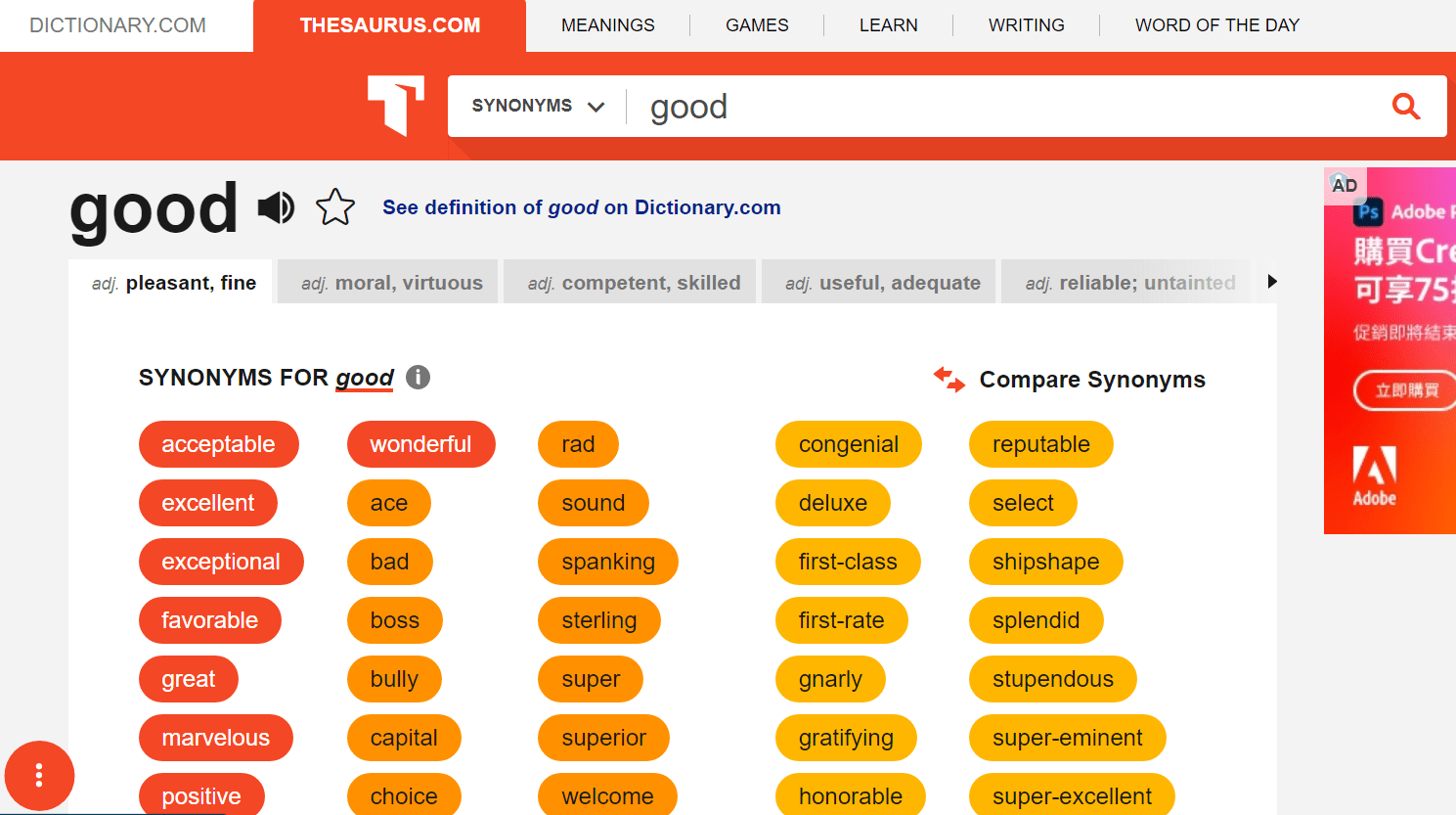
From there you can pick the synonym that fits the meaning you want, making your prose more varied and precise. One caveat: if you pick a synonym you’re not fully confident in, look it up in a dictionary first before committing to it. XD
Collocations – Netspeak
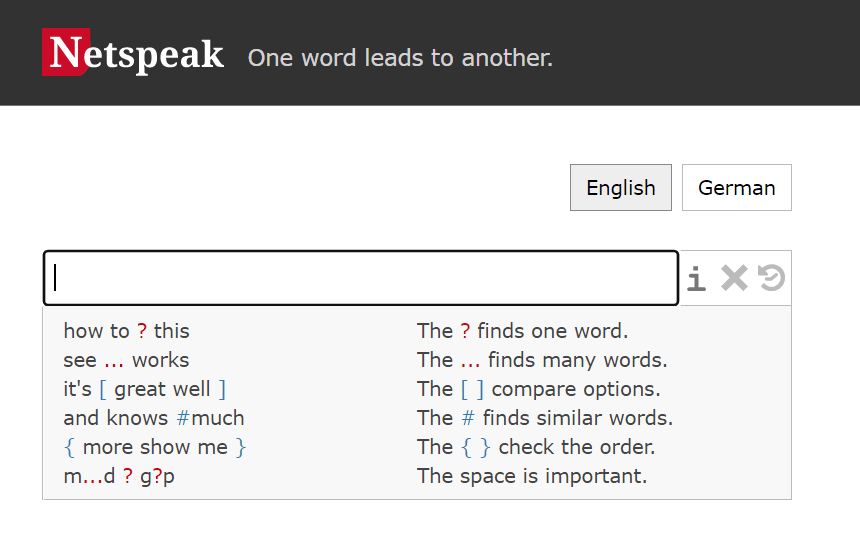
Netspeak has saved me so many times when I couldn’t figure out the right preposition or phrasing.
As shown in the screenshot below, it supports query syntax similar to regular expressions. For example, if I want to know what word typically fills “how to __ this,” I use ? as a wildcard; for multiple words, I use ….
Bonus tip: it’s also great for playing Wordle — when you’re one letter away and stuck, ? shows you all the possibilities. XD
Grammar Checkers – Reverso, Spellcheckplus, Grammarly
Grammar-checking is an essential step in the process. I use three tools depending on the length and stakes of what I’m writing.
Reverso
For shorter, less formal pieces, I’ll go straight to Reverso. It’s free, and they’ve recently added a Rephrase feature.
In the screenshot below, I deliberately typed a grammatically incorrect sentence: “Their sale revenue has grew up significantely. It’s not wat I anticipated.” — and Reverso automatically corrected it:
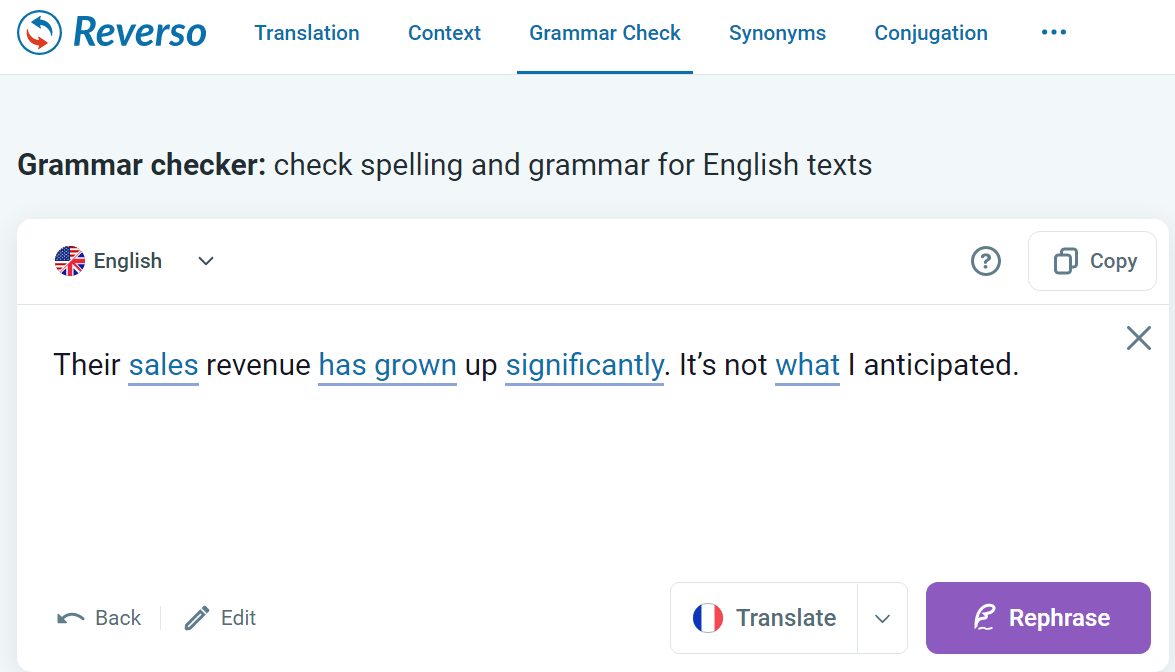
The underlined parts show what was changed. It doesn’t catch everything, but it reliably flags careless errors. XD The one limitation: it maxes out at 450 characters, so you’ll need to paste in sections for longer texts.
Spellcheckplus
When I want to be extra careful, I’ll run the text through Spellcheckplus as well. Also free. The editor has a few more features, though I still tend to reach for Reverso first. Think of it as an extra option. 🙂
Grammarly
You’ve probably already heard of Grammarly. XD The paid version is genuinely excellent — but there’s a free tier too, which I’ll skip since most people can try it directly.
When you upload or paste a document, Grammarly asks: Who’s your audience? How formal is this? What domain? What’s the goal? You set these according to your purpose, and it tailors its vocabulary recommendations accordingly — because what you need for an email is very different from what you need for a journal paper. 😀
Once configured, it gives feedback on grammar, word choice, and sentence structure. For instance, it’ll flag monotonous phrasing, sentences that are too long or hard to parse, and overuse of the passive voice (which I’m very guilty of).
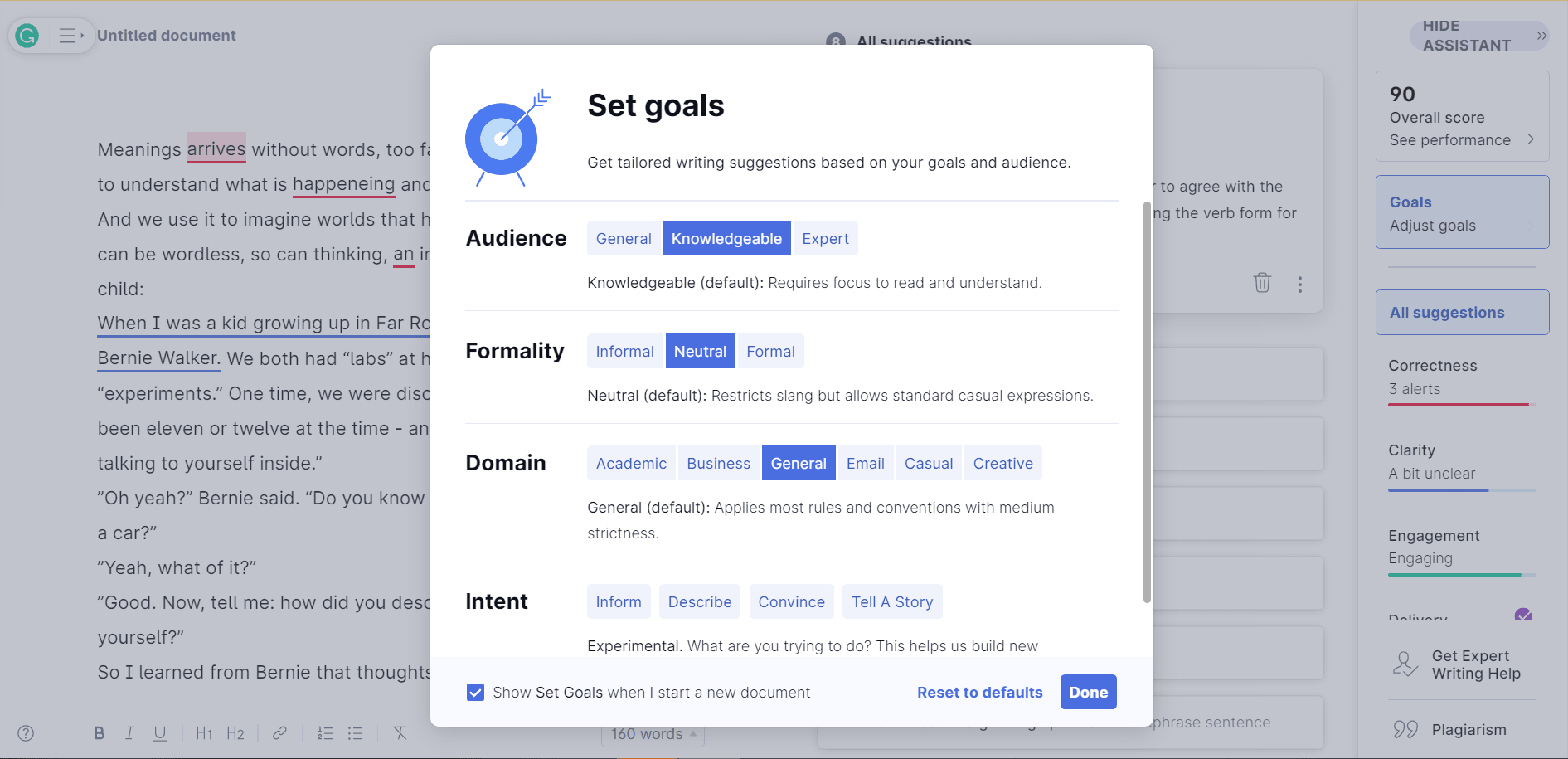
At this point, Grammarly handles most of my needs — especially for important emails or urgent formal replies, running it through Grammarly is non-negotiable for me. XD
Manuscript Editing Services
If you’ve made it through all the tools above, congratulations — you’re at the final stage!
Before formally submitting to a journal, if you’re not fully confident in your written English, a manuscript editing service is worth considering.
There are many services out there, but in my experience the fit matters a lot — an editor’s familiarity with your field will significantly affect the quality of the edit. Your labmates’ recommendations are usually the safest starting point.
Honestly, I’ve only used one editing service, so I can’t give you a broad comparison. But the one I used was run by a former writing instructor from the NTU Writing Center who had returned to their home country. I found it incredibly good value: for papers up to 30 pages, they charged NTD 3,000, payable via a Taiwanese bank account. Any revisions needed after the review process were free of charge. They also proactively shared writing tips and structural suggestions — and the turnaround was fast, usually within a week. Genuinely moving. T_T
Here’s the email I got from them — you can feel the care they put in:
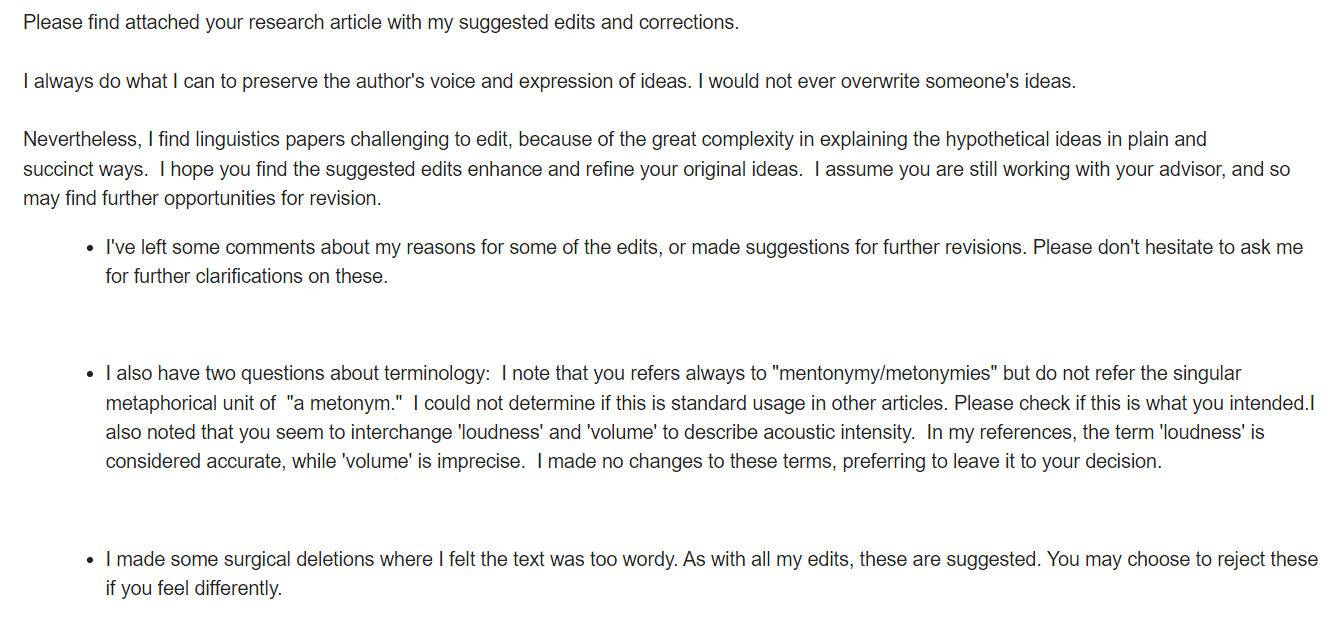
A few things to look for when choosing an editing service:
- Price: What’s the total cost? Is there a free sample edit?
- Domain expertise: Has the editor worked on papers in your area?
- Scope of service: Is it copy-editing only, or do they also provide substantive feedback? If the paper gets rejected and needs to be revised and resubmitted, is that covered?
Whether a paper gets accepted ultimately comes down to its originality and contribution — but editing is absolutely a non-negotiable step. If the English reads poorly on first impression, no matter how good the content is, reviewers will struggle. Don’t skimp on this.
If you’re interested in Wordvice manuscript editing services, you can use my referral link for a 10% discount — and I’ll receive a small commission. 😀
Closing Thoughts
When it comes to academic writing in English, I’m still very much a learner myself. But after a small personal milestone, I wanted to share what I’ve found helpful along the way.
None of this is one-size-fits-all — the most important thing is finding a writing process that works for you. Wishing everyone smooth sailing! 🙂 And please do leave a comment with any resources you’d recommend.
Thanks for reading :D
If you enjoyed this post, feel free to click the coffee button in the lower right to support us and give Lottery a can 🐾
Comments