life
[Book Review] Gory Details: Will Your Cat and Dog Actually Eat You When You Die? Adding to My Collection of Weird Knowledge
This is a review of Gory Details: Adventures from the Dark Side of Science by Erika Engelhaupt. Engelhaupt is basically the queen of weird knowledge — her book is packed with disgusting, bizarre, and genuinely well-researched science. Perfect for readers who love strange articles, forensics, or dark curiosities. Honestly, “adding weird knowledge to my brain” is the most accurate possible summary of this reading experience XD

Right in the preface, Engelhaupt describes how she was “enlightened” (?) early in life — as a child she loved collecting teeth she found in trash heaps. As an adult, she discovered she couldn’t suppress her morbid curiosity, so she started writing the Gory Details blog.
The more bizarre and gross something is, the more irresistible it tends to be — I think I was pulled in by a book excerpt somewhere on the internet. But what makes this different from standard click-bait is that Engelhaupt actually researches and backs up everything she writes, rather than just stringing together gross things for shock value. That rigor is a big part of the appeal.
 Gory Details: Adventures from the Dark Side of Science, Erika Engelhaupt, Big Stone Culture (image source: Books.com.tw)
From Morbid Psychology to Bugs to Bodily Fluids — Gory Details Covers It All
The book is divided into six major sections:
- Morbid Curiosity: death, corpses, and crime scenes
- Truly Gross: maggots, flies, and fatbergs
- Taboo: experimental surgeries, cannibalism, necrophilia
- Creepy Crawlies: rats, mites, cockroaches
- Anatomy: secretions, excretions
- Mysterious Minds: delusions, voodoo, super-memory
Essentially, every gross or morbid thing you can think of is in here. And because it’s all in text form, you don’t need to worry about literal nausea — throughout most of the book I felt more fascinated and eager to drag someone nearby over to share what I’d just read. Engelhaupt writes with a playful, light touch, which makes the whole thing read smoothly (not exactly comfortably… the content is deliberately uncomfortable, but still).
Since Engelhaupt is a science writer who previously worked at National Geographic, you can trust the accuracy of the information.
She also has a real nose for topics — standard popular science articles may not get much attention, but weird research like this guarantees clicks :P
Memorable Moments from Gory Details
No spoilers, but here are some highlights that stuck with me.
The World’s Smallest Crime Scenes
The book introduces Frances Glessner Lee and her series of miniature dioramas called the “Nutshell Studies of Unexplained Death.” These models are obsessively detailed, and many of them have since been used as teaching tools for training detectives. No modern forensic technology (like DNA) is used — students have to observe the delicate details of each scene (the blood spatter pattern, the faint traces left by a blunt instrument) and learn to notice what matters in an actual investigation. There’s a great article about it: Murder Is Her Hobby: Frances Glessner Lee and The Nutshell Studies of Unexplained Death — full of photos and video. Genuinely stunning.
- Lee, F. G. (2004). The Nutshell Studies of Unexplained Death. Monacelli Press.
- Goldfarb, B. (2020). 18 Tiny Deaths: The Untold Story of Frances Glessner Lee and the Invention of Modern Forensics. Sourcebooks, Inc.
If You Died, Would Your Dog Eat You?
We all wonder how much our pets actually care about us. And even if they did eat you, it wouldn’t mean they didn’t love you — but “ate their owner” is still the kind of thing that tends to make the news. With a little dog like Lottery at home, that headline obviously caught my eye. I’ve faked my death before and Lottery showed zero interest in rescuing me. I’ve also wondered: if I die someday, would he eat me?
Engelhaupt cites numerous academic papers and forensic reports to walk through just how many documented cases exist of cats and dogs consuming their deceased owners. The book also discusses which types of pets are more likely to do it, and where they typically start…
As the subtitle says — even if they did eat you, you wouldn’t know. But this chapter genuinely added a new layer to my weird-knowledge collection XD
- Biro, D., et al. (2010). Chimpanzee mothers at Bossou, Guinea carry the mummified remains of their dead infants. Current Biology, 20(8), R351-R352.
- Buschmann, C., et al. (2011). Post-mortem decapitation by domestic dogs: three case reports and review of the literature. Forensic science, medicine, and pathology, 7(4), 344-349.
- Colard, T., et al. (2015). Specific patterns of canine scavenging in indoor settings. Journal of forensic sciences, 60(2), 495-500.
- Hernández-Carrasco, M., et al. (2016). Indoor postmortem mutilation by dogs. Journal of Veterinary Behavior, 15, 56-60.
- Maksymowicz, K., et al. (2011). Refutation of the stereotype of a “killer dog.” Journal of veterinary behavior, 6(1), 50-56.
- Ropohl, D., et al. (1995). Postmortem injuries inflicted by domestic golden hamster. Forensic science international, 72(2), 81-90.
- Rothschild, M. A., & Schneider, V. (1997). On the temporal onset of postmortem animal scavenging. Forensic science international, 89(1-2), 57-64.
- Smith, B. (2015). The dingo debate: origins, behaviour and conservation. Csiro Publishing.
- Steadman, D. W., & Worne, H. (2007). Canine scavenging of human remains in an indoor setting. Forensic Science International, 173(1), 78-82.
- Verzeletti, A., et al. (2010). Post-mortem injuries by a dog: a case report. Journal of forensic and legal medicine, 17(4), 216-219.
The Spread of Semen
This section starts with forensic expert Annalisa Durdle’s experiment feeding blowflies various human bodily fluids — blood, saliva, semen — alongside non-human snacks: pet food, canned tuna, honey. The idea was to see what the flies preferred. The answer? Semen attracted by far the most flies. Engelhaupt quotes Durdle directly:
Semen is the crack cocaine of the fly world. They gorge themselves, they get drunk. They stagger around, they’re partially paralyzed — I even saw one fly give up trying to clean itself and just sit on its butt! Then they go back for more, until they die. But they die happy!
I never expected to be writing this in a blog post orz
Here’s the interesting follow-up: semen is rich in polyamines (which flies need) and also loaded with DNA. So when a fly feeds on semen, it’s carrying around the donor’s DNA — and potentially depositing it elsewhere. Could this cause problems? The author raises the possibility that it might complicate forensic DNA analysis… for the full story, read the book XD
- Cale, C. M. (2015). Forensic DNA evidence is not infallible. Nature News, 526(7575), 611.
- Cale, C. M., et al. (2016). Could secondary DNA transfer falsely place someone at the scene of a crime? Journal of forensic sciences, 61(1), 196-203.
- Durdle, A., et al. (2018). Location of artifacts deposited by the blow fly Lucilia cuprina after feeding on human blood. Journal of forensic sciences, 63(4), 1261-1268.
- Durdle, A., et al. (2016). The food preferences of the blow fly Lucilia cuprina. Journal of forensic sciences, 61(1), 99-103.
- Hussain, A., et al. (2016). Ionotropic chemosensory receptors mediate the taste and smell of polyamines. PLoS biology, 14(5), e1002454.
The Most Lethal Mammal
Guess which mammal kills the most members of its own species? You might think lions, tigers, or humans. But if we’re ranking by rate of intraspecific killing across over 1,000 species, humans come in at only number 30…
The actual number one? Timon from The Lion King — the meerkat.
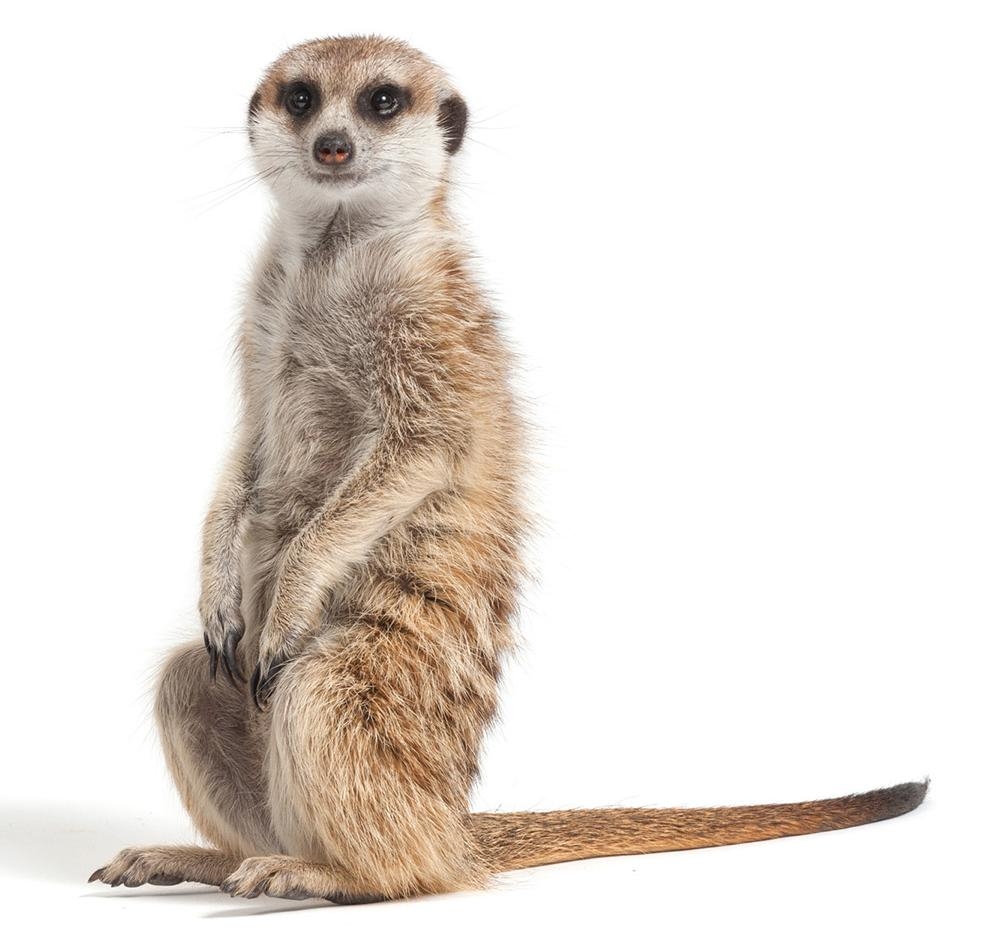 Can you believe it’s this guy? / Meerkat, a mammal native to southern Africa. (Image source: National Geographic)
The piece notes that human violence (e.g., warfare) is actually trending downward compared to other mammals — for a full treatment of that, check out The Better Angels of Our Nature by Steven Pinker. The chapter also surveys infanticide and intraspecific killing across species: dominant female meerkats, it turns out, kill and eat the offspring of lower-ranking females in the group to preserve resources for their own young. The book covers similar phenomena in primates, sea lions, gazelles, squirrels, whales, pangolins, and others.
- Bell, M. B. V., et al. (2014). Suppressing subordinate reproduction provides benefits to dominants in cooperative societies of meerkats. Nature Communications, 5(1), 1-6.
- Gómez, J. M., et al. (2016). The phylogenetic roots of human lethal violence. Nature, 538(7624), 233-237.
- Perrtree, R. M., et al. (2016). First observed wild birth and acoustic record of a possible infanticide attempt on a common bottlenose dolphin. Mar Mamm Sci, 32(1), 376-385.
- United Nations Office on Drugs and Crime. (2011). Global Study on Homicide 2011.
The Most Painful Sting in the World
Getting bitten by a mosquito is bad enough. A bee sting is worse. But Justin Schmidt, an entomologist at the University of Arizona, has been stung over a thousand times by insects — and turned the experience into something like a wine-tasting scale: the Schmidt Sting Pain Index, ranking stings on four levels. For example, a red paper wasp scores a 3, and the sensation is described as:
Caustic and burning. Distinctly bitter aftertaste. Like spilling a beaker of hydrochloric acid on a paper cut. (p. 201)
His greatness lies not only in his dedication to research through personal suffering, but in his sense of humor…
And then there’s researcher Michael Smith, who divided his body into 24 zones and tested which spots hurt the most when stung by a bee — bravely including some truly terrifying special locations…
This chapter genuinely opened my eyes to how much some researchers sacrifice in the name of science. I thought I had a high bar.
- Schmidt, J. O. (2016). The sting of the wild. JHU Press.
- Schmidt, J. O. (2019). The Insect Sting Pain Scale.
- Smith, M. L. (2014). Honey bee sting pain index by body location. PeerJ, 2, e338.
- Wilcox, C. (2016). Venomous: How Earth’s Deadliest Creatures Mastered Biochemistry. Scientific American/Farrar, Straus and Giroux.
Peeing in the Pool
Growing up, there was always this story going around: swimming pools use a dye that changes color if someone pees in them! This urban myth probably still circulates today. But Engelhaupt argues no such dye actually exists — the liability alone would be a nightmare (?).
Which means swimming pools almost certainly contain quite a lot of urine. This section covers all sorts of pool urine research: exactly how much pee is in the typical pool? Does urine react chemically with pool chlorine? And so on.
- Andersson, M., et al. (2018). Early life swimming pool exposure and asthma onset in children. Environmental Health, 17(1), 34.
- Lian, L., et al. (2014). Volatile disinfection byproducts resulting from chlorination of uric acid. Environmental science & technology, 48(6), 3210-3217.
- Science Scene: Peeing in the pool is an act of chemical warfare
- Ask Ars: How much pee in a pool would kill you?
Super-Recognizers
In criminal investigations, eyewitness identifications are crucial — but they’re unreliable, and false identifications have caused wrongful convictions (Po-Jang Hsieh has discussed false memory and false IDs on his podcast). But this section isn’t about memory — it’s about recognition ability. Even with perfect memory, could you pick out someone from a crowd years later, if you’d only seen them briefly at a high school sports day?
In 2015, the London Metropolitan Police formed a “super-recognizer” unit — people with extraordinary face recognition ability. With their help, police have actually tracked down suspects with prior records. One team member, Gary Collins, browses through mugshots on his iPad as a hobby; at peak, he’s identified three suspects over a Sunday lunch. During the 2011 London riots, he identified 190 rioters.
These people attend major events every year to spot troublemakers. Honestly so cool.
At the other end of the spectrum is “face blindness,” which has an actual clinical name: prosopagnosia. But even without a diagnosis, most of us overestimate how good we are at recognizing strangers.
If you’re curious, you can take the test developed by psychologist Josh Davis at the University of Greenwich: Find out if you’re a super-recognizer. The English is simple, and after I took it I discovered I’m not nearly as face-blind as I thought. A friend who was convinced they were great at faces bombed it with strangers XD
Let me know your score in the comments! And if your ability is very high, maybe you’ve got a future in law enforcement :P
p.s. There’s also a super-recognizer test for voices, if you want to try that too
- Elbich, D. B., & Scherf, S. (2017). Beyond the FFA: brain-behavior correspondences in face recognition abilities. Neuroimage, 147, 409-422.
- Russell, R., et al. (2009). Super-recognizers: People with extraordinary face recognition ability. Psychonomic bulletin & review, 16(2), 252-257.
- Sacks, O. (2010). Face-Blind. New Yorker, 36-43.
- White, D., et al. (2015). Perceptual expertise in forensic facial image comparison. Proceedings of the Royal Society B, 282(1814), 20151292.
Is Gory Details Really “Gross”?
The book is genuinely full of things we’d call disgusting, morbid, or horrifying. But are they actually?
Gory Details is built around subjects that trigger our deepest curiosity — Engelhaupt knows this — but she also takes time to remind us that what we call “disgusting” or “disturbing” is almost always framed from a particular cultural or human perspective.
Many cultures find insects gross, yet insects are a vital food source elsewhere. Everyone hates cockroaches, but cockroaches don’t think they’re gross. We find excrement repulsive, yet for many animals, coprophagy is perfectly natural. When we view the world only through our own eyes, we miss all the perspectives that don’t look like ours.
The meerkat chapter is a perfect example: I couldn’t believe meerkats were so “violent” and “savage” — but when I reframed it, I realized that “savagery” is entirely our construct. For meerkats, it’s survival.
I was obsessed for a while watching the crested goshawk nesting documentation at Daan Forest Park in Taipei (you can find breeding season footage on RRGTaiwan’s YouTube channel around May and June each year). I’ve watched a parent hawk completely ignore a weaker chick while the stronger sibling bullied it to death. I’ve watched a dead chick get fed to its siblings by the parent.
These things look incomprehensible by human standards — but they happen constantly in the natural world. We really can’t impose our values on these creatures and call them cruel.
Engelhaupt knows all this, and she devotes plenty of space to explaining the meaning behind these animal behaviors and reflecting on what it means for humans. Here’s one passage that stays with me:
As for humans, we tend to cast a judgmental eye on any animal that doesn’t live by our rules. We praise albatrosses for mating for life, while ignoring that they also cheat. And we absolutely do not want to picture tuxedoed penguins mating with corpses.
But that says more about our discomfort with moral failure than it does about some law of nature. We prefer to believe that our values mirror the order of the universe — like a sweet sentiment embroidered on a pillow. The universe, though, is not so kind. Instead, we have to make up the rules ourselves and follow them. (pp. 152–153)
The book thankfully doesn’t dwell in that mode — the moralizing is kept to a minimum, and most of the time Engelhaupt is just being funny and informative.
Wrap-Up
As someone who follows the Ig Nobel Prizes every year and occasionally writes popular science pieces myself, I deeply admire Engelhaupt’s narrative style and commitment to accuracy. I started tracking down the studies mentioned in some of the highlights — and then discovered the book already lists every single reference at the back, and has even more than I found. Every little story is backed by at least three papers or reports. The research here is real.
The three biggest problems in science writing — not finding an angle the audience cares about, writing too densely, failing to synthesize the research — simply aren’t problems in this book.
Highly recommended for anyone who loves weird research, forensics, or dark curiosities XD
And if you come across any interesting articles or studies yourself, I’d love it if you shared them with me :3
Title: Gory Details: Adventures from the Dark Side of Science
Author: Erika Engelhaupt
Translator: Yao Ruo-jie
Publisher: Big Stone Culture
Thanks for reading :D
If you enjoyed this post, feel free to click the coffee button in the lower right to support us and give Lottery a can 🐾
Comments