TCSL Certification Exam: Chinese Linguistics Study Guide + Past Exam Questions Released (Updated May 2026)
A breakdown of the Chinese linguistics sections covered in the Teaching Chinese as a Second Language (TCSL) certification exam — what each subject tests, how to study for it, and where to practice with past exam questions.
A subject-by-subject guide to the Chinese linguistics portion of the Teaching Chinese as a Second Language (TCSL) certification exam, covering high-frequency topics in grammar, phonology, morphology, and more — plus an introduction to the LinguaPass past exam practice platform.
Want to practice past exam questions for free?
I’ve turned years of compiled exam materials into a dedicated practice website. You can drill by category — phonology, morphology, grammar — with detailed explanations for each question and automatic tracking of the ones you get wrong.
It’s much more useful than a spreadsheet, and it’s free to get started. Check out LinguaPass — designed by Iju Hsu, built specifically for the TCSL certification exam.
Enter “IJUHSU” for a NT$500 discount. If you’re willing to share your experience afterward, reach out for a special additional discount code 🙂
Practice Chinese Linguistics past exam questions for free
Chinese Linguistics and the TCSL Exam — A Brief Overview
Many people dream of teaching Chinese — some even want to teach abroad — but why exactly does the TCSL certification exam include a Chinese linguistics subject? Understanding its purpose might actually help you study smarter.
Some people assume that being able to speak Mandarin is enough to teach it. That’s not quite right.
My co-host and I discussed this in depth in this episode: Language S02E09: Can You Teach Chinese Just Because You Speak It? Things to Know Before Entering the TCSL World. It gets at why linguistics knowledge matters for language teachers.
To put it simply:
From my own perspective: “Can you teach Chinese if you can speak Chinese?” — yes, technically. But “can you teach it well?” is the real question.
I’ve met many non-native-speaking teachers who, without formal training, struggled to answer questions like “why does this grammar work this way?” or “why is this sound pronounced like this?” For them, it was just instinct or habit — they couldn’t explain the underlying rules or cultural context.
Once you go through a structured teacher training or certification program, you understand why the language works the way it does. You can bring rules and frameworks into your teaching and explain them in ways that are both accurate and engaging. That’s what professional training is designed to give you.
Consider questions like:
What’s the difference between zh/ch/sh/r and z/c/s? How do you help students produce them accurately?
In the phrase “米老鼠買小米酒” (Mickey Mouse buys millet wine), every character has a third tone — so why do we change some of them?
Both “書” (book) and “弟弟” (younger brother) are nouns. “弟弟買書” (younger brother buys a book) makes sense — so why doesn’t “書買弟弟” work?
”突然” and “忽然” both mean “suddenly” — what’s the difference?
When do you use “你好” versus “您好”?
These aren’t nitpicky academic questions — they’re exactly the kinds of things students ask in real classrooms. You can’t brush them off with “I don’t know, that’s just how Chinese works.” But you also can’t explain them with dense technical jargon. Striking a balance between academic rigor and classroom accessibility is precisely what Chinese linguistics in the TCSL exam is designed to test.
What Does the Chinese Linguistics Exam Cover?
With that context in mind, the exam content follows naturally from the questions above:
What’s the difference between zh/ch/sh/r and z/c/s? → Phonetics
Why do we change tones in “米老鼠買小米酒”? → Phonology
Why does “書買弟弟” sound wrong? → Syntax
What’s the difference between “突然” and “忽然”? → Semantics
When do you use “你好” vs. “您好”? → Pragmatics
Before diving into each subject, here’s a look at the distribution of question types on the exam from 2010–2025. I’ve combined phonetics and phonology into one category; questions that overlap multiple subjects are counted under each relevant category.
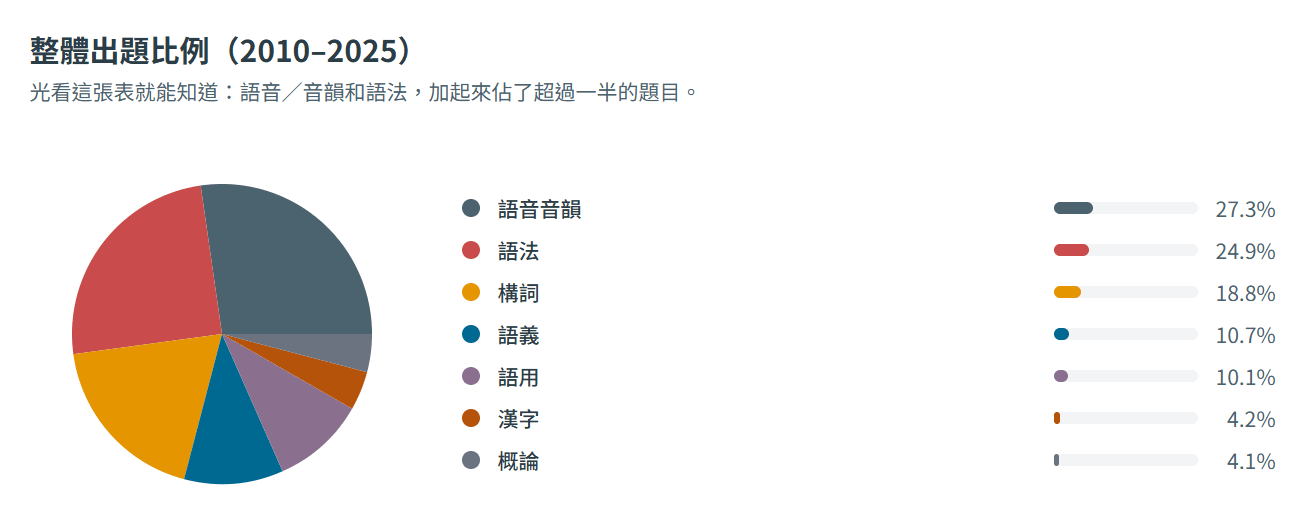
From the chart, it’s clear that syntax, phonology/phonetics, and morphology dominate the exam; general overview and Chinese characters appear rarely; pragmatics shows up every year with 3–5 questions in a fairly consistent format.
Here’s a quick overview of what to focus on for each subject:
- Phonetics & Phonology: How initials, finals, and tones are produced, and the tonal rules of Mandarin. If you memorize it, you’ll score it — the most reliable source of consistent points.
- Syntax: Sentence structure, word order rules, and special sentence patterns. Questions have increased significantly in recent years — this is now the largest section of the exam. Ba-sentences (把字句), Bei-sentences (被字句), and pivotal sentences (兼語句) are essential.
- Morphology: The internal structure of words — morphemes, word categories, and the five types of compound words. Fewer questions in recent years; focus on the core concepts.
- Semantics: Word meaning structure and relationships — types of antonyms, ambiguous sentences, and semantic components. Grasp the core framework; no need to memorize every detail.
- Pragmatics: How language is used in real-world contexts. Relatively few concepts, consistent question formats, minimal rote memorization required — understand the framework and you’ll score well.
- Chinese Characters: The six principles of character formation (六書) and the history of character evolution. Fewest questions on the exam — just getting the six principles down is sufficient.
- General Overview: The overall characteristics of Mandarin and basic concepts of linguistic typology. Few questions, but the distinctive features of Mandarin appear almost every year.
If there’s a subject you consistently struggle with, or if you want to see roughly how many points each subject typically accounts for, head to LinguaPass to view the historical breakdown by subject and target your weak spots directly.
Chinese Linguistics Past Exam Questions — LinguaPass
When studying Chinese linguistics for the TCSL exam, keep in mind that the subjects aren’t entirely separate — they influence each other (for example, third-tone sandhi is connected to morphology; ambiguous sentences affect syntactic analysis). So it’s worth giving each subject some attention.
You’re welcome to take my course, of course XD — but self-studying is totally doable too!
From observing many students in the field, the common pain points are: past exam practice is cumbersome, it’s hard to know what you got wrong and why, and it’s unclear where to focus your efforts.
That’s why I built LinguaPass — a dedicated past exam practice site.
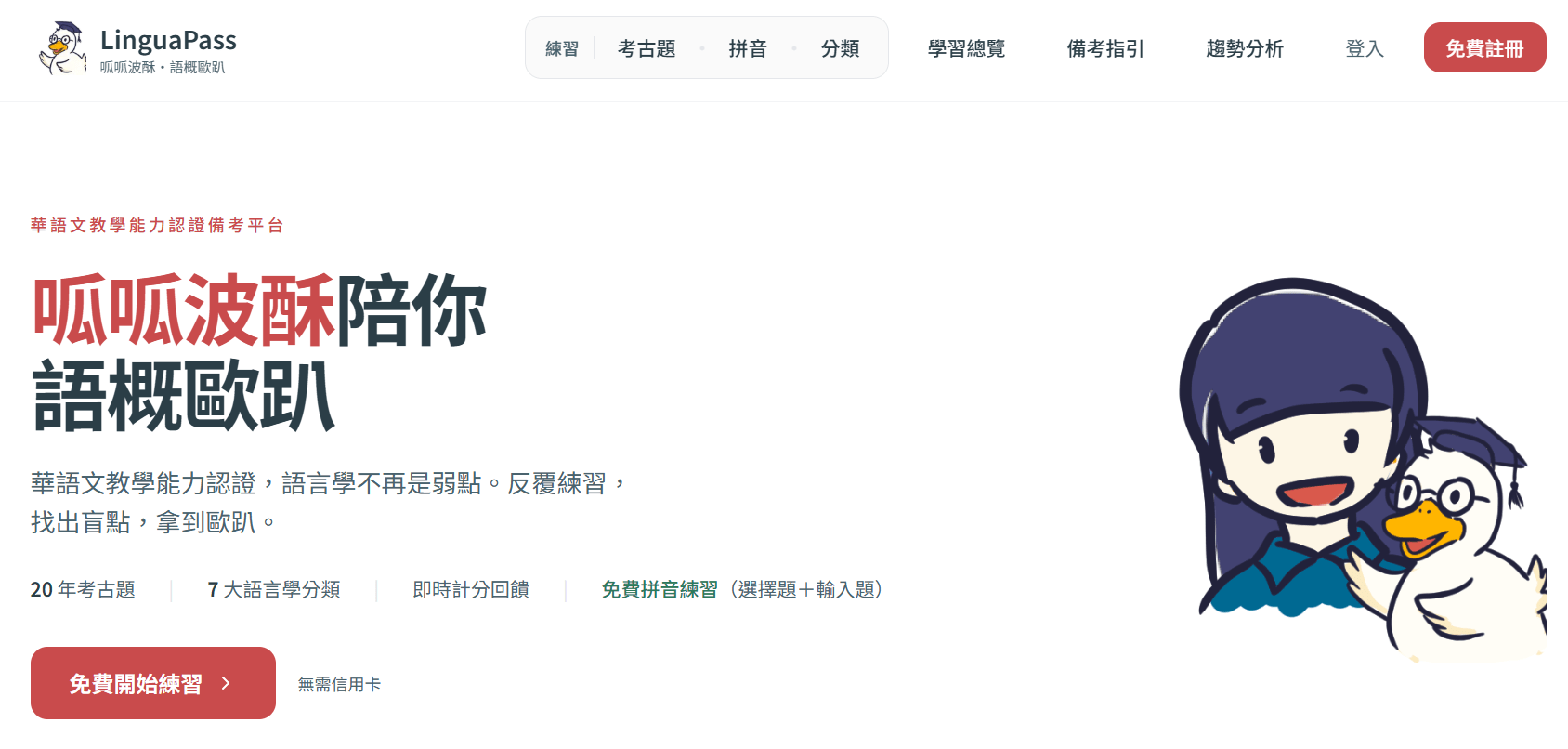
The core features are free, though paid tiers unlock more content.
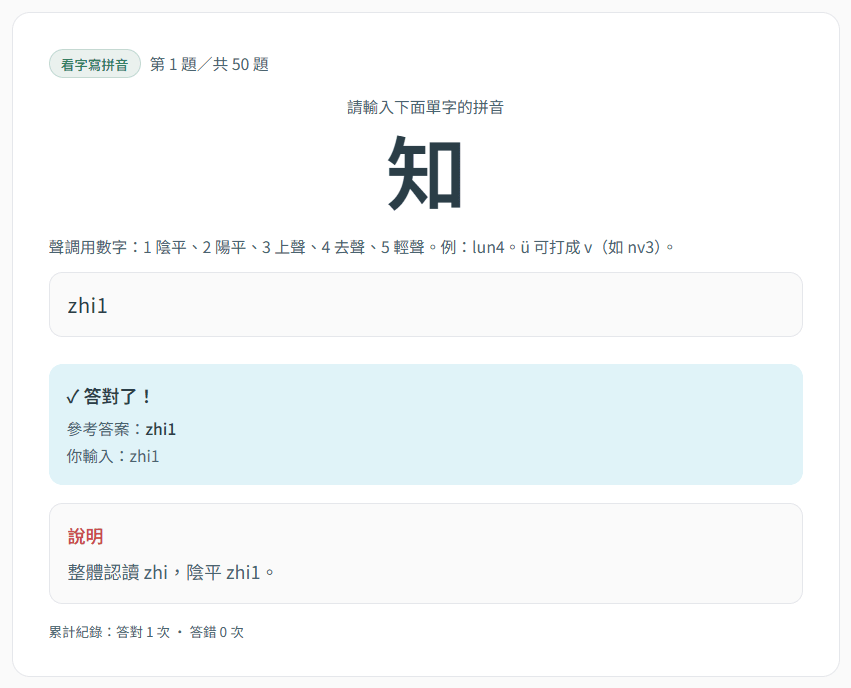
To start: there’s a fully free Mandarin pinyin practice module with 50 randomized questions. If your pinyin is shaky, don’t skip this one 😉
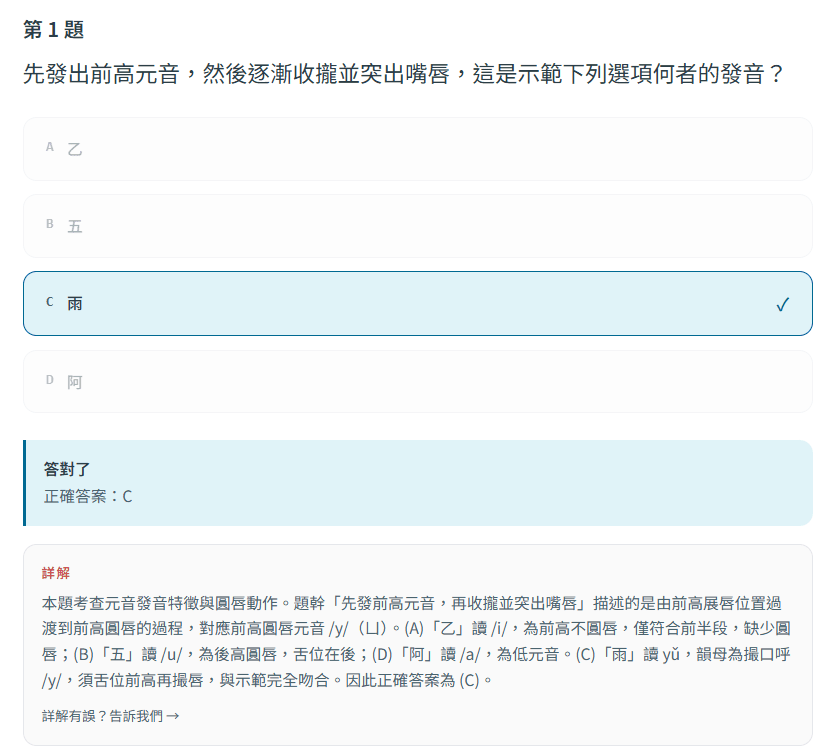
Most importantly, the site has compiled all Chinese linguistics past exam questions going back to 2006. Practice directly on your phone — immediate answers, automatic scoring, and detailed explanations for every question.
After each practice session, you’ll get a breakdown of your performance by subject across past years — so you know exactly where to put your energy.
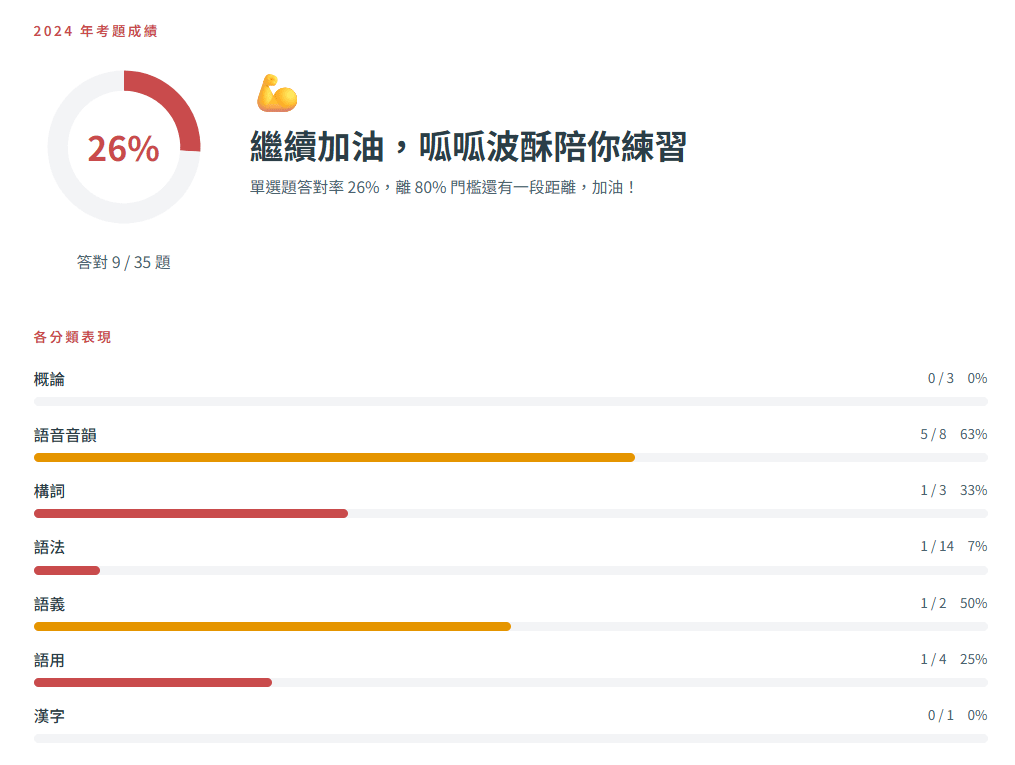
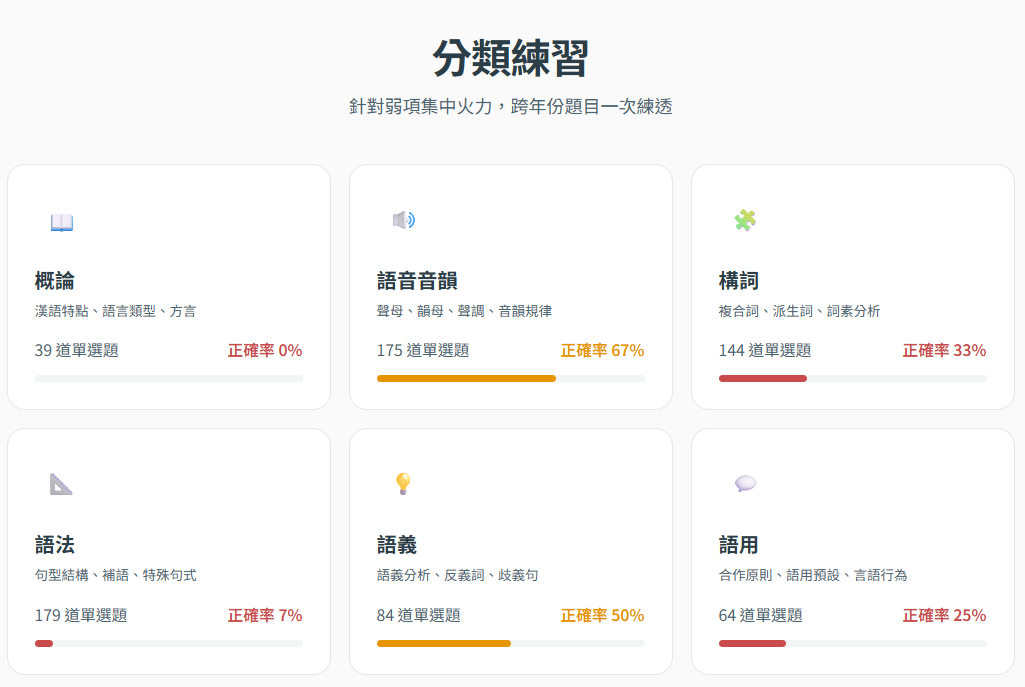
Want to drill a specific subject? No problem — there’s a focused subject practice mode so you can concentrate on your weakest areas.
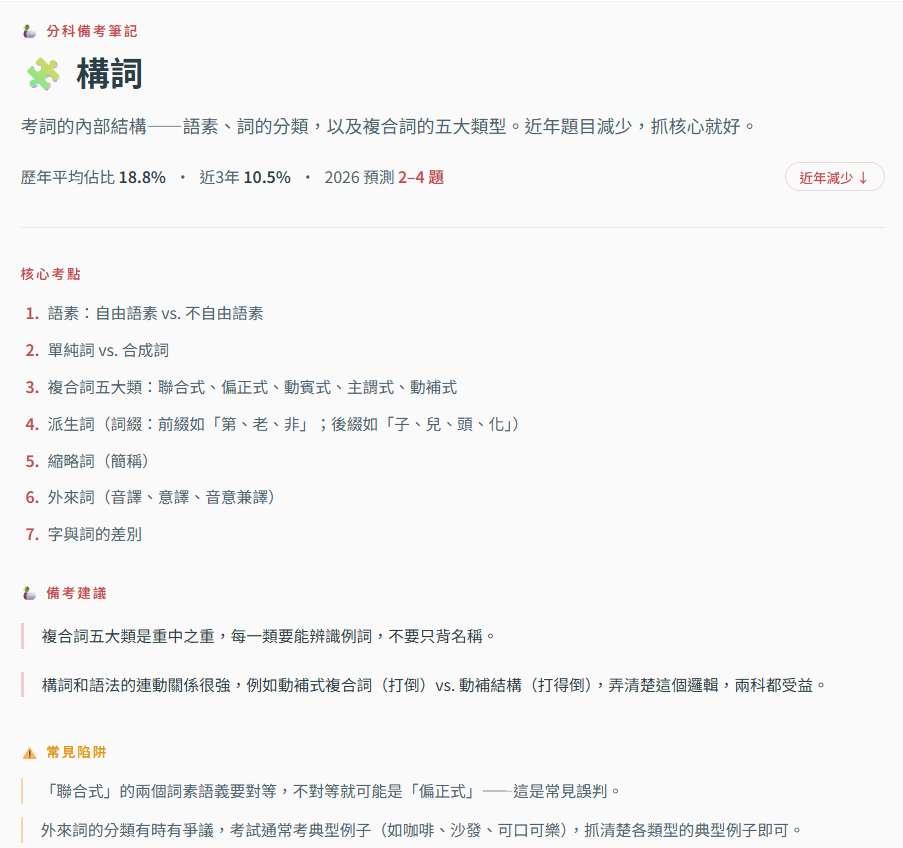
Each subject also includes a concise study note summary. For example: morphology questions have decreased in recent years, but the core exam topics haven’t changed — master the fundamentals (the five compound word types, the distinction between simple and compound words) and you’ll be well-positioned to score those points.
Want to practice past exam questions for free?
After all that — come try LinguaPass, designed by Iju Hsu for the TCSL certification exam.
Enter “IJUHSU” for a NT$500 discount. If you’re willing to share your experience afterward, reach out for a special additional discount code 🙂
Practice Chinese Linguistics past exam questions for free
Thanks for reading :D
If you enjoyed this post, feel free to click the coffee button in the lower right to support us and give Lottery a can 🐾
Comments