Linguistics → UXR | Two Years as a ShopBack UX Researcher
From September 2021 to September 2023 — what a week looks like as a ShopBack UXR, how the role evolved, and what I learned along the way.
A Week in the Life of a ShopBack UX Researcher
Before getting into reflections, here’s what a typical week actually looks like. I once shared a comic version of our week at Friends of Figma — worth watching if you’re curious, starting around the 30-minute mark. 🙂
The weekly routine looks more scheduled than it is — in practice, stakeholder requests and ad hoc meetings fill the gaps constantly. But the recurring anchors are:
Daily mornings: 15-min standup — previous day’s progress, today’s plans, any blockers
Monday: Biweekly Product Design Team sync
Wednesday: 45-min chit-chat with the team (we’re split across locations 😉)
Thursday: Afternoon is “flow day” — meetings strongly discouraged, space to focus
Friday: Afternoon Product Design Office Hour — share learnings, new designs, interesting finds; biweekly syncs for research updates or retrospectives
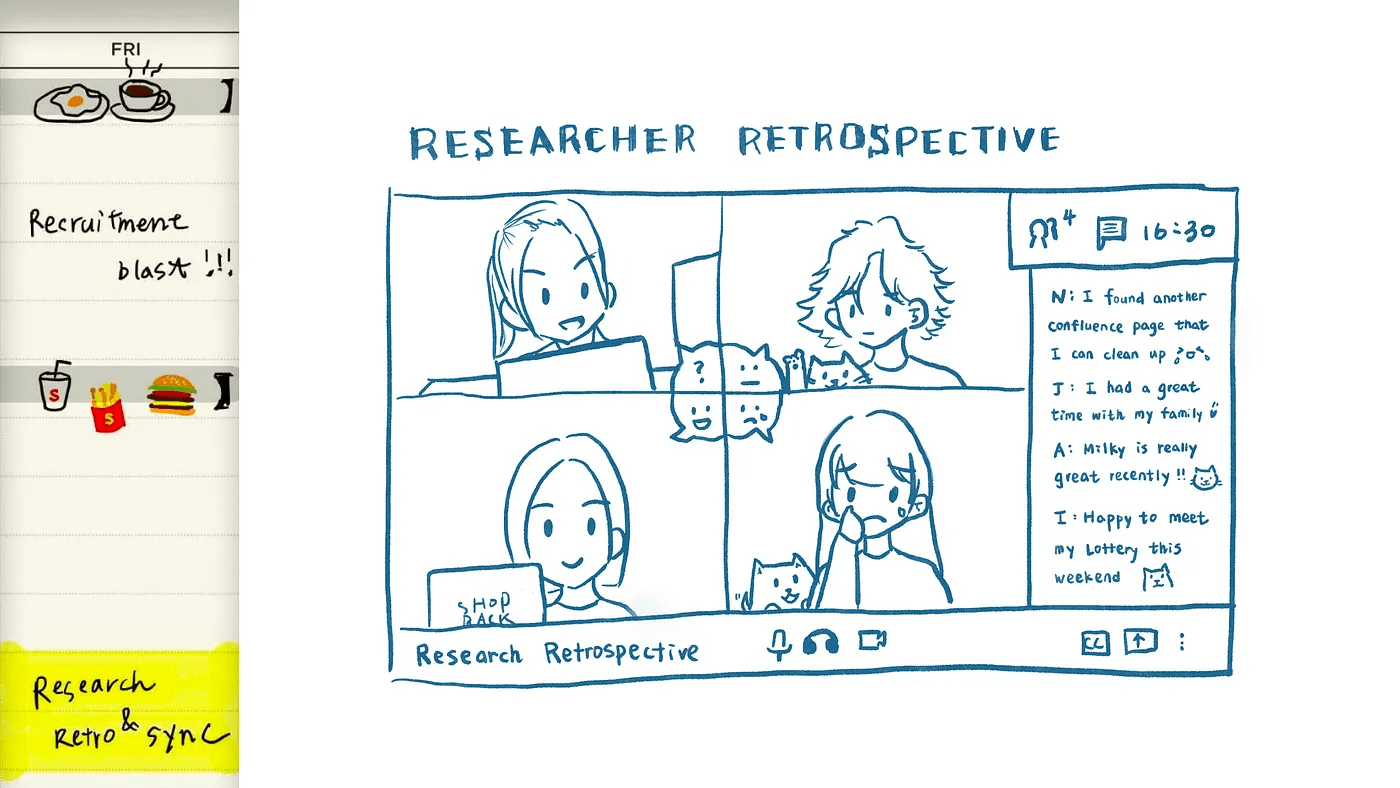
Everything else in the week depends on what’s in flight.
What Does a ShopBack UXR Actually Do?
My title is UX Researcher, but I’ve started feeling less like a “researcher” in the traditional sense — in a good way.
In the two years since I joined, the UXR function at ShopBack has evolved considerably. We’re no longer just running user studies; we’re deeply involved in strategic research. Before I get into what changed, here’s the baseline of what we do:
- Help stakeholders define research objectives
- Recommend appropriate research methods
- Run the research
- Analyze with both quantitative and qualitative data
- Share findings and discuss next steps with stakeholders
The timeline varies wildly by research type — as short as one to two weeks, as long as six months. But the direction has shifted in some meaningful ways.
First: User Research Democratization.
Our designers and PMs are already capable of running basic studies — usability tests, user interviews, guerrilla research. So we let them lead those, and focus our effort on deeper, broader research. Building that system took real upfront investment: standardizing processes, documenting methods, creating templates and step-by-step guides. Slow to build, fast to scale. Now they rarely need our help because everything is clearly documented.
Second: From behavioral research to strategic research.
This follows directly from democratization. With a team of four (soon to lose one intern 😢), we’ve shifted toward research that’s cross-team, longer-term, and higher-stakes. Usability validation is handled by designers; we’re now working at the level of overall product direction and higher-order user insights.
Third: Our internal clients expanded from product teams to the whole company.
We used to serve mainly PD and PM. Now other departments come to us too. Recently we’ve been working closely with the Commercial Team to understand who our users actually are and how they shop. We’ve also partnered with Operations to audit internal processes.
Fourth: We now face outward — to partners, not just users.
As an e-commerce platform, we also need to understand our merchant partners: what they want, where they’re stuck. Last year we ran a Merchant Research project, interviewing them directly, mapping their types and pain points.
Fifth: From purely qualitative to mixed-methods.
Our team has always been qualitative-first, but we’ve been building quantitative capabilities too. Everyone now has basic data analysis skills — we use quant to validate and support our qual findings. This year, my big project required heavy data analysis, so I dusted off the statistics I once dreaded in grad school and picked up Python again. Painful but deeply interesting — more on that below.
Reflections on Two Years
This post probably won’t teach you anything practical. It’s just a milestone record. What follows is a bit scattered.
There have been frustrations, of course — some company policies genuinely baffling for a team with most stakeholders overseas. But overall, I still find the work challenging and exciting every day. I credit my fantastic manager and brilliant teammates; every meeting sparks something. The benefits (especially one month of Work From Anywhere!) make real work-life balance actually possible.
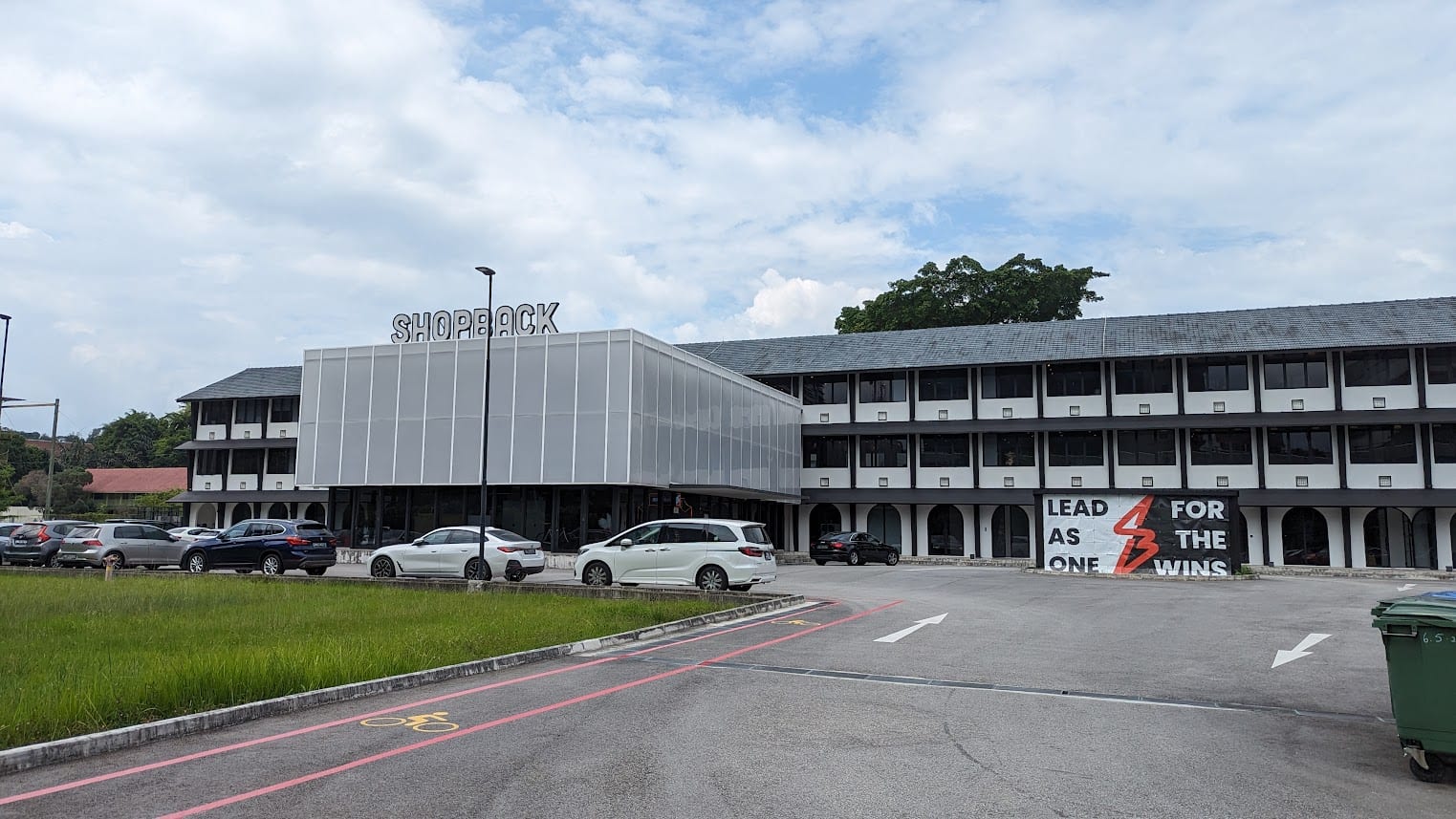
In August I visited Singapore for ShopBack HQ. Realized mid-trip that I’m too old for red-eye flights. 😢 But seeing ShopBack’s branding everywhere in Singapore was a strange, proud feeling — really drove home the scale and potential of what we’re building.
The area where I’ve grown most in these two years: stakeholder management (see my earlier post for more context). Still learning, but I’ve opened up — more likely now to proactively ask stakeholders questions, pull them into conversations. I used to worry they’d find me bothersome. But I’ve come to see that everyone is working toward the same goal, and they genuinely want to help us get there. The shift from guarded to collaborative — and from tentative to confidently holding research quality standards — has been a long, genuinely interesting process.
I’ve also stepped outside my qualitative comfort zone to do more quantitative work. A middle school friend nearly fell out of her chair laughing when I told her I’m now doing statistics — anyone who knows me knows how bad my math is. Stats was a grad school survival requirement for me, and somehow here I am using it in production. Some things just find you eventually.
Picking up Python again, layering in business strategy framing — it’s opened up a whole new way of seeing things. Past-me always thought Personas were kind of fluffy. Then I actually ran clustering analysis and saw how powerful data-driven personas can be. Learning really does not end.
And: I love ChatGPT. It’s been a game changer for research — Python, data analysis, writing — all faster and better. I’ll write about that at some point.
Two years in: skills sharper, perspective broader. The work is still exciting every single day. Wherever I’m reading this again in the future — I hope I’ve held onto the curiosity and the drive to keep learning. 🙂
Thanks for reading :D
If you enjoyed this post, feel free to click the coffee button in the lower right to support us and give Lottery a can 🐾
Comments