travel
Should Zoos Exist? A Human Zoo? Or an Animal Zoo? — Notes from a Taipei Zoo Field Visit
When a friend was in Kyoto, I visited Kobe Animal Kingdom several times, but somehow I barely knew my own city’s zoo. One afternoon I ended up joining a guided tour of the Taipei Zoo led by Zhang Dongjun. Zhang, also known as the “Frog Witch,” worked at the Taipei Zoo for many years; even after leaving nearly a decade ago, she still knows every corner of the grounds and every animal by name.
Most people who know me know I love animals — I visit any zoo or animal farm I can: the Taipei Zoo, Shou Shan Zoo in Kaohsiung, Kobe Animal Kingdom, Ueno Zoo in Tokyo, the Zao Fox Village in Shiraishi; Willowbank Wildlife Reserve in New Zealand. But every time I do, I find myself wondering whether my presence places a burden on the animals, or whether I’m contributing to a cycle of animal trafficking and poor welfare.
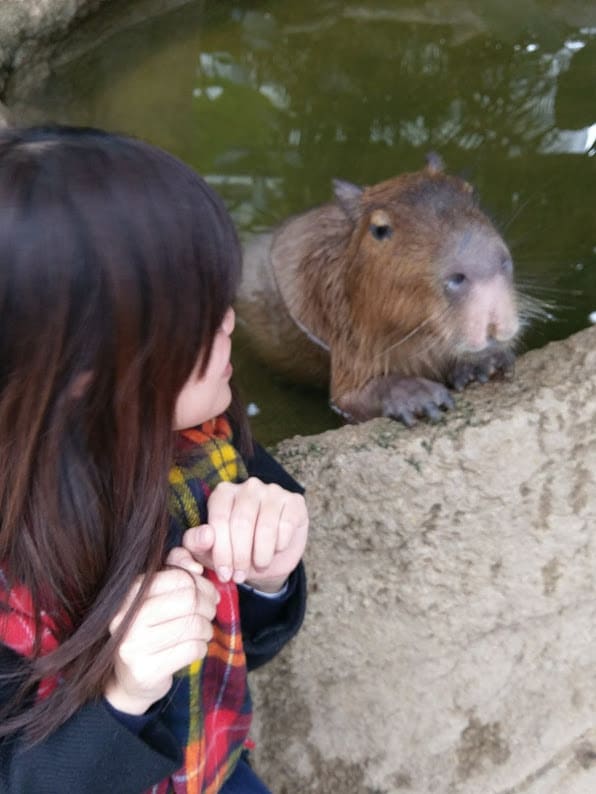
I know many people criticize zoos as stripping animals of freedom, harming their welfare, as a form of human selfishness. I’d been reading around this topic in advance of the visit, and my perspective had already started to shift. I’d recommend anyone curious to read Wuo Wuo and Approaching the Zoo — they have great content and in-depth discussions.
Should zoos exist? This field visit made my answer clearer. I’m not a professional, but I’ve compiled notes from what Zhang Dongjun shared.
A Quick Look at the Taipei Zoo
The Taipei Zoo is in Muzha, covering 165 hectares total with about 90 hectares open to visitors — the largest zoo in East Asia. For comparison, Ueno Zoo in Tokyo is 15 hectares, and the Yokohama Zoological Gardens (Zoorasia) is 50. Rumor has it that if you read every exhibit sign and visit every zone carefully, it takes over ten hours.
The Taipei Zoo has 14 “halls” (indoor) and “zones” (outdoor), organized across ten departments with around 120 animal keepers. Early hiring didn’t emphasize field of study or tended toward livestock-adjacent backgrounds. Over time, the requirements shifted toward zoology and biology — and that change in who was hired also changed how animals were understood and cared for.
Do You Like Your Animals Round and Chubby?
How the zoo’s administration views animals matters enormously — it shapes the environment and the care the animals receive.
Zhang Dongjun explained that under earlier leadership rooted in livestock industry thinking, animals were treated like domestic animals — and plump, well-fed animals signaled good care. Remember those famously obese Siberian tigers? That round, prosperous look was considered a sign of good husbandry. Old thinking.
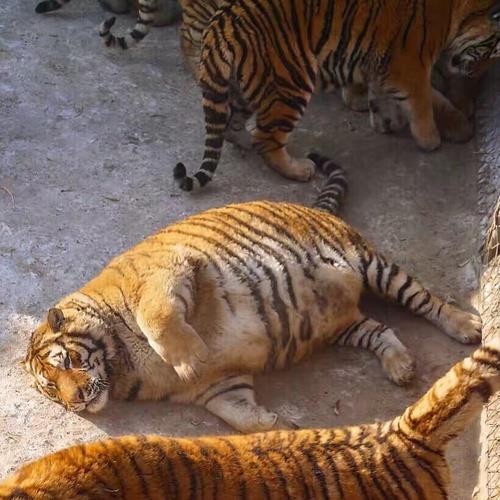 Siberian tigers that ballooned to near-spherical (Image: Liberty Times)
As institutional leadership changed, western zoo management philosophies were adopted, and staff backgrounds diversified — animals began to be treated as wild animals. The “auntie raised” look disappeared. Instead, the focus shifted to environments and lifestyles that match their natural habitat.
Taiwan’s Disappearing (and Returning) Formosan Sika Deer
Many people might ask: if that’s the standard, why not just abolish zoos? Let them live in actual nature.
That brings us back to the core question: does the zoo serve a necessary purpose?
We didn’t formally put this to Zhang Dongjun, but the story of the Formosan sika deer gives you her answer.
Taiwan has many place names that include the word for “deer” — because the island once had a thriving population of Formosan sika deer. Due to steady agricultural development and commercial demand for deer hides, antler velvet, and venison, the last wild Formosan sika deer died in 1969. Starting in 1986, the Taipei Zoo began reintroducing captive-bred deer to Kenting and Green Island as part of a restoration program. That’s why wild sika deer exist in those places today (source: Taipei Zoo).
In 1992, all the deer in the zoo contracted tuberculosis and had to be culled. Fortunately, some breeding deer had already been sent to Kenting. The deer you see in the zoo today came back from Kenting.
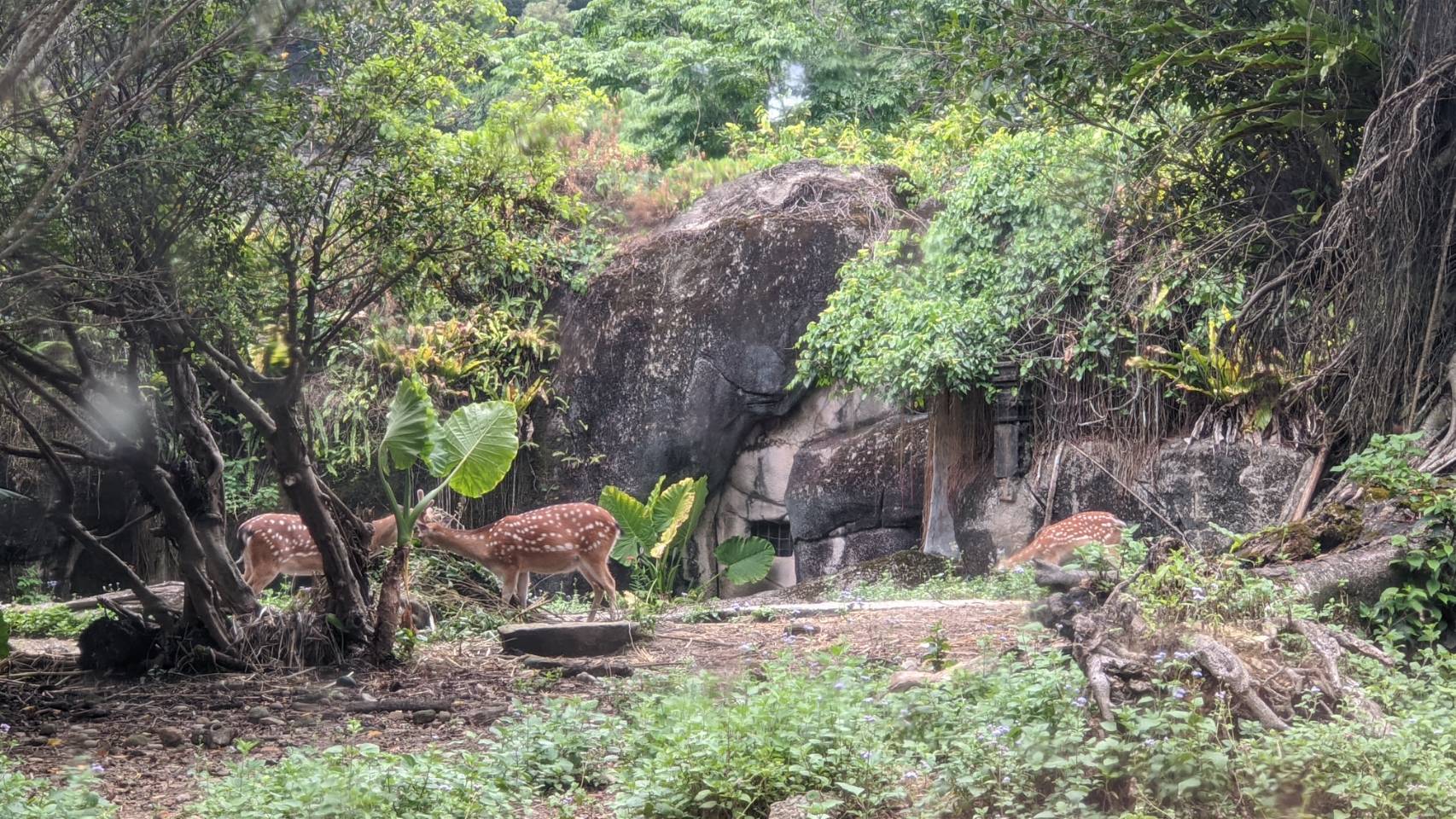
This story shows what a zoo can do: species preservation and breeding, and the value of distribution — not keeping all your eggs in one basket. If the zoo hadn’t bred and distributed those deer, they might have vanished entirely.
This is why zoos around the world exchange animals: each new location is a backup. If war, disease, or some other catastrophe wipes out a species in its native range, there remains a chance somewhere in the world to restore it.
The Black Bear Retirement Village
Most animal extinctions are tied to human activity. But zoos aren’t simply expressions of human selfishness — inside them are keepers and researchers dedicated to conservation and maintaining genetic libraries. When animals are exchanged between institutions (with sale increasingly avoided to prevent trafficking incentives), careful genetic research ensures the right animals are paired.
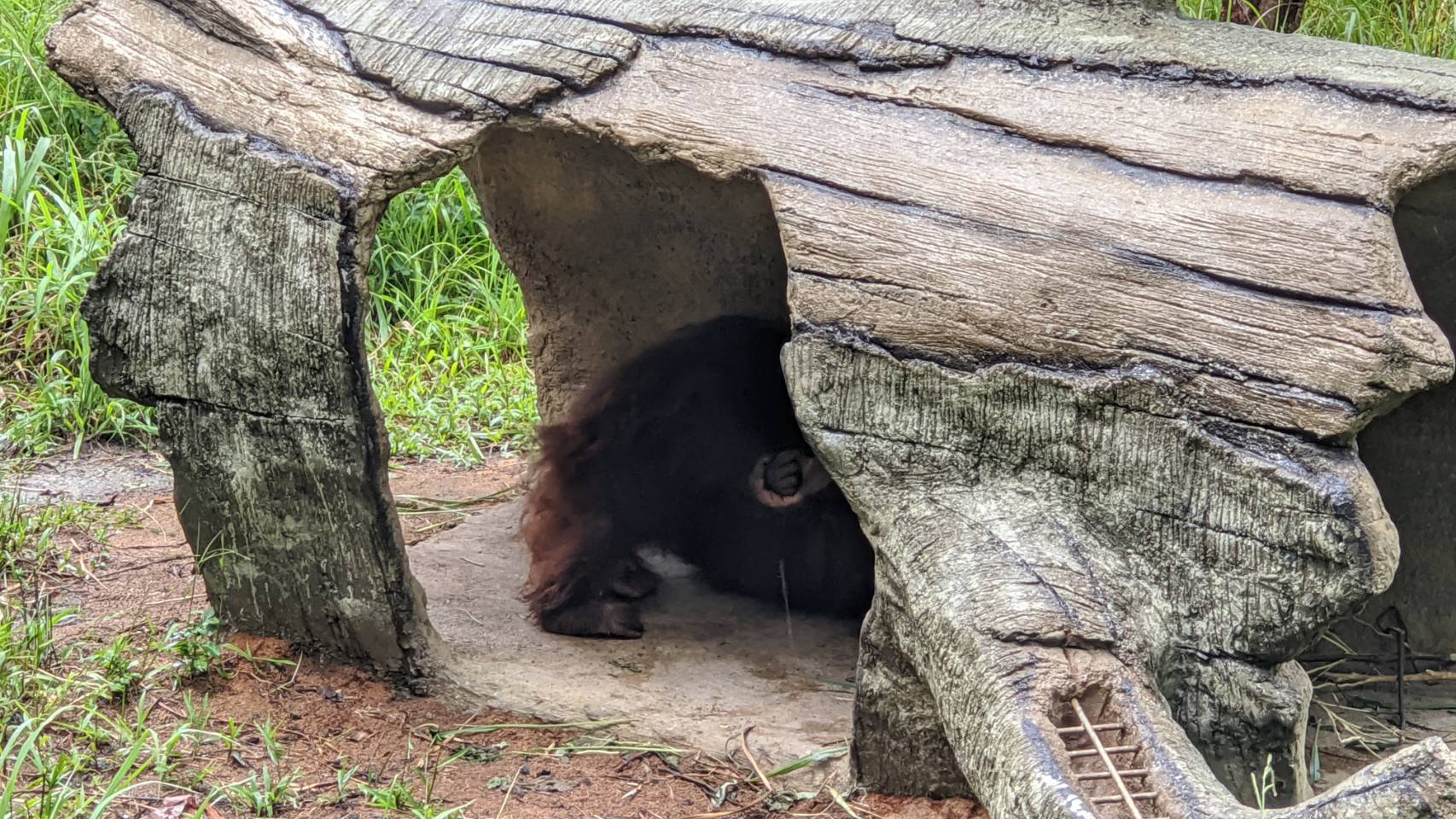
The Formosan black bear is one example of a species urgently needing recovery. After cross-referencing the genetics of black bears held at multiple Taiwanese institutions, ten individuals with wild-matching genetic profiles were selected for priority breeding (source: Taipei Zoo). Others were excluded from the program due to age, health, or genetics — but they’re still cared for well. The zoo even has a “Black Bear Retirement Village” for elderly bears confiscated from private owners or surrendered to the zoo after the Wildlife Conservation Act. They’re past the age for release or breeding, so the zoo becomes their home.
From Stereotypic Behavior to Environmental Enrichment
If it were possible, wouldn’t everyone want animals living freely in the wild? Conservation, breeding, and rescue are the last-resort justifications for zoos’ existence. Since we can’t guarantee wild life for all of them, the more urgent question becomes: how can a zoo maintain animal welfare?
Have you ever seen an animal that just paces in circles all day, doing the same thing over and over? This is called Stereotypic Behaviour. Zhang Dongjun writes in Animals, Counted One by One:
The higher the frequency of these abnormal behaviors, the worse the quality of life — so whenever animals start showing stereotypic behavior, you need to quickly find something for them to do, to add some interest to their lives.
The practice of “finding things for animals to do” is called Environmental Enrichment. Introducing toys, randomizing feeding times and locations, letting them forage — all of these count.
Remember the “round and chubby” problem? When keepers provide a fixed meal at a fixed place and time, animals inevitably get fat. In the wild, these animals might spend half a day or more finding food, sometimes going without. Zoos increasingly mimic those natural patterns and enrich environments to keep animals active. Black bears might need to dig in multiple parts of the exhibit to find hidden food before a bird steals it. Elephants get tires as toys and sit on them. Orangutans find a broom and start mopping. These are the results of enrichment.
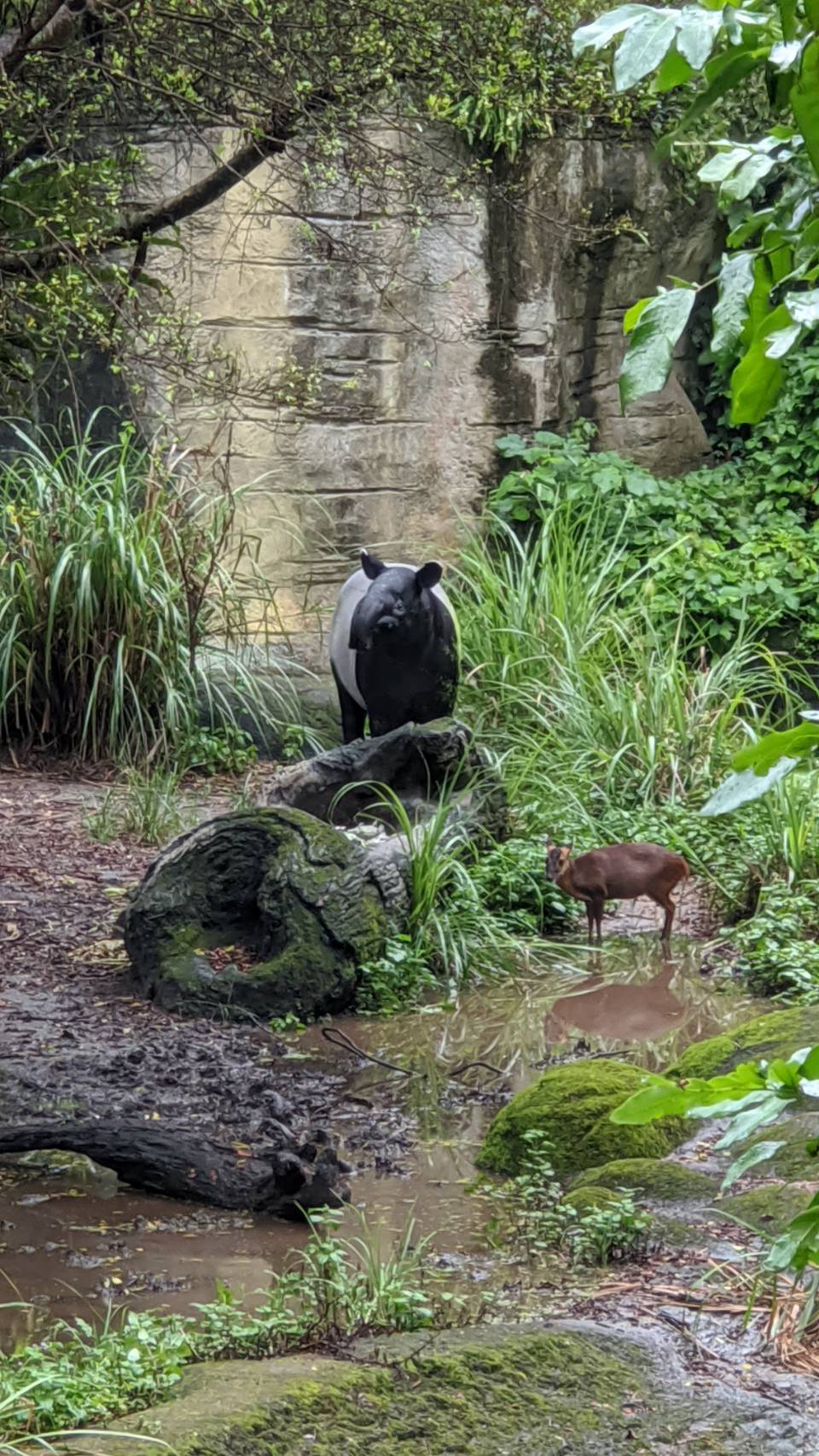
Another form of enrichment is cohabitation — mixing species. In the wild, no space is home to only one species. Thoughtfully pairing animals generates natural interaction that enriches their environment. According to Zhang Dongjun, the two animals most commonly mixed with others are the Reeve’s muntjac and tortoises — both abundant and easygoing.
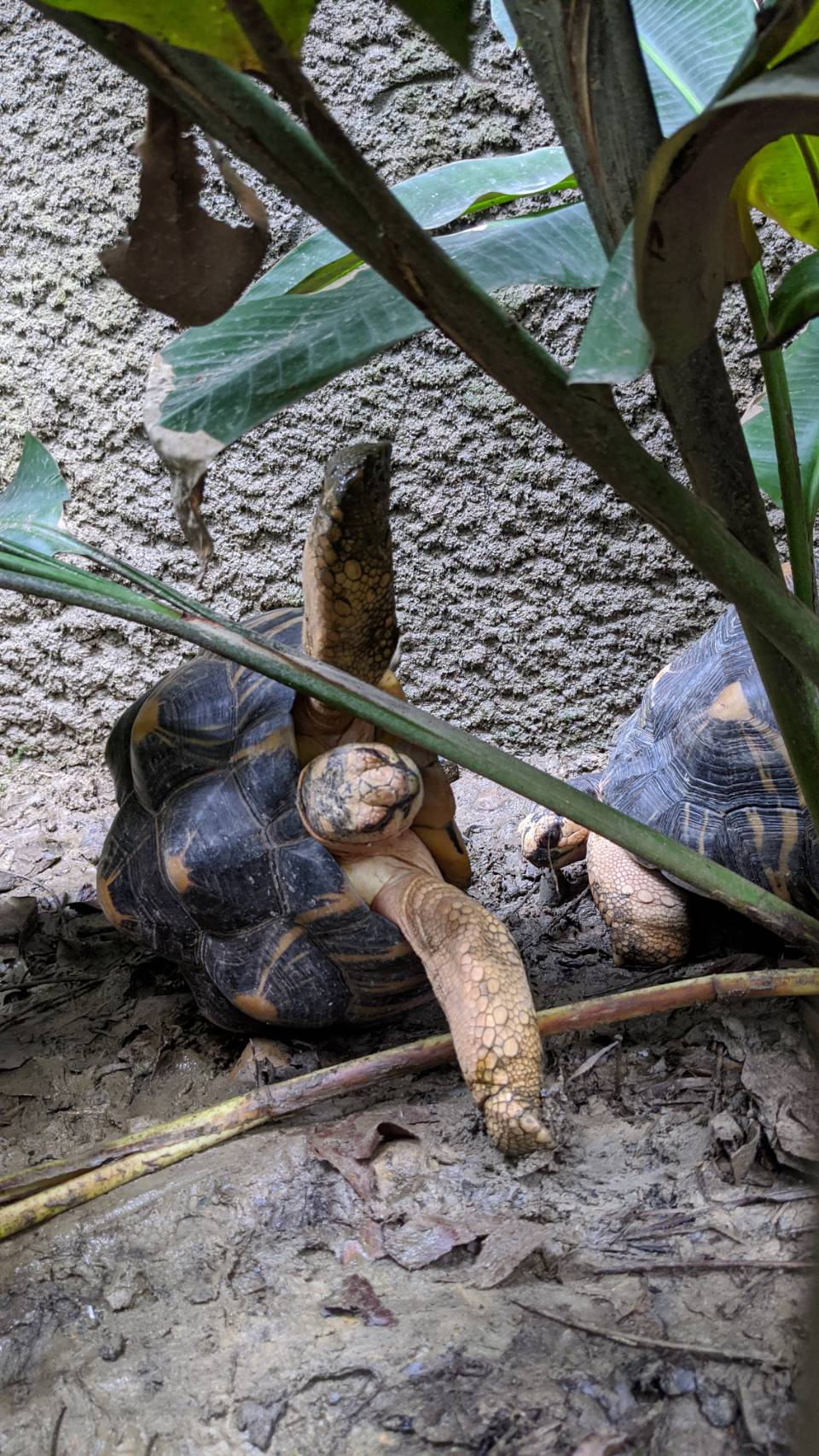
Zhang Dongjun mentions gibbons and muntjacs having memorable interactions in both her guided tour and her book. Gibbons are intensely curious about everything and will apparently try to ride any animal they encounter. The muntjac just takes one sidestep and the gibbon lands flat on the ground — a comedic scene that enriches both animals’ lives and extends how long visitors will stand there watching.
Some zoos also rotate which animals occupy which exhibit space. Day one might be a predator (like a leopard); day two, prey (like an antelope). The predator sniffs out the prey’s scent and searches for it; the prey animal encounters a predator’s scent and tries to find cover. Cross-enrichment through shared space.
One-Star Review: “Couldn’t See Any Animals” ??
Zoo exhibit design also matters. If you’ve visited the Taipei Zoo, you’ve probably wondered why some enclosures are so full of plants that no animal is visible. We stood at the clouded leopard enclosure for a while and couldn’t find the animal at all.
It turns out clouded leopards simply prefer to hide in dense forest — they’re naturally elusive. The enclosure was designed to match their habitat. But if the enclosure were kept bare to satisfy human desire to see the animal, would the leopard be happy?
Zhang Dongjun mentioned that many zoos regularly invite researchers who study animals in the wild to assess whether the enclosures actually match the species’ natural behaviors and needs. The zoo’s own researchers also go out to observe in the field. Through this exchange, the goal is to give animals better welfare.
So when we walk into a zoo and can’t see an animal, the right response isn’t to give it a low review — it’s to ask: why is the enclosure designed this way? Is this design better for people, or for the animal? Once we’ve accepted that zoos have a necessary role, we should focus our attention on animal welfare — not just on whether we personally got a good look.
Closing Thoughts
I asked two questions at the end of the tour.
First: “Is letting animals interact closely with humans actually good for them?” Zhang Dongjun said it depends on the animal — you can’t generalize. Beyond the animal’s own temperament, the environment matters enormously. The raccoon café controversy that got a lot of attention showed that raccoons aren’t suited to a café’s confined space, and without proper protective barriers, they shouldn’t be in close contact with humans.
Then I asked about a certain zoo in Taiwan that had been getting a lot of attention for marketing itself as “cage-free.” She was diplomatic. Afterward, she pointed me to this article: “A Zoo Without Cages — Whose Dream Does It Fulfill?”. I read it, and understood.
Thanks for reading :D
If you enjoyed this post, feel free to click the coffee button in the lower right to support us and give Lottery a can 🐾
Comments