Linguistics → UXR | How to Get Real Value from ADPList Mentorship
After nearly 20 ADPList mentorship sessions, with 3 mentees landing jobs and 1 getting into grad school — here's what made the difference, from a mentor's perspective.
What is ADPList?
For those who aren’t familiar: ADPList is a platform for free mentorship. Whether you want to talk through career direction, get portfolio feedback, or practice interviews, you can find someone experienced to guide you through it.
It started with heavy UX/PM representation, but has since expanded to Engineering, Marketing, and beyond — much more diverse now. 🙂
All mentors volunteer their time (which makes “value for money” a funny framing for this post, since it’s literally free 😄). Profiles show their company, experience, and what they can help with. You can search by role, company, or name.
Click on a mentor’s photo to see their background, experience, and reviews from previous mentees — a great way to figure out if they’re the right fit for you.
Booking a Session
Full disclosure: I’m on the slower side — only 19 completed sessions so far, with 15 unique mentees. Three of them came back afterward to tell me they’d found jobs 😭 and one got into the overseas grad program they wanted.
Most of my mentees are students or people breaking into UX. Some are peers in the field. 😊
Here’s what I’ve noticed about the mentees who get the most out of it.
Check That the Mentor Is Actually the Right Fit
Before booking, always look at the mentor’s full profile — not just the headline. Check:
- Bio: How they describe themselves, what you can infer about their working style
- LinkedIn or other links
- Background: Specializations, languages, work history, education
- Achievements: Session count, etc.
- Reviews: What past mentees say
Especially read the bio carefully. The structured fields are brief — the bio is where you see the real person.
If you’re looking for a qualitative researcher but the mentor primarily does quantitative work, the session may not be as useful. If you want portfolio feedback on UI/UX design but come to me… I’ll do my best, but I’m not a Product Designer and my feedback won’t be as sharp. 😄
But if you’re coming from academia and wondering whether to get a PhD, or how to pivot from research to industry — I might be exactly who you’re looking for.
Write a Clear Booking Request — Include Relevant Links
When booking, the system asks you to describe your session goals. The more specific, the better.
Instead of:
“I’m thinking about switching careers and want you to review my portfolio.”
Try:
“I’m finishing my linguistics PhD and want to move into industry (background). My goal is to join a tech company as a UX Researcher (target). For this session, I’d like to hear your experience transitioning from academia to industry, and get feedback on my current portfolio (session objective).”
This lets me prepare relevant context and materials in advance, which makes the session much smoother.
The most memorable mentees often share their LinkedIn or portfolio link in the booking request itself. By the time we meet, I’ve already looked at their work, and we can dive straight into real feedback instead of spending time loading things up.
Prepare Questions in Advance
A session is typically 30 minutes. I usually go over, but don’t assume every mentor will. Thirty minutes goes fast. Preparation is how you make it count.
The mentees I remember most clearly all came prepared with questions — whether they shared them with me beforehand or just pulled them out during the session. You could tell they’d done their research. No dead air, no pivoting to figure out what to ask. Just direct, focused conversation.
During the Session
Be on time. All my mentees have been great about this — most arrived before me. 😄 If something comes up, shoot a message.
Introduce yourself. Even though mentors are used to meeting new people, a quick intro up front — your background, what you want from today — saves a lot of time and sets the agenda.
Be direct about what you need. Don’t wait to be asked. I’ve had sessions where the mentee seemed unclear on what they wanted, and I spent a lot of time pulling out what they were actually looking for. That’s time that could’ve been used better. Being proactive and upfront is more useful than being polite and vague.
Take notes. Not because mentors are oracles 😄, but because you’ll absorb more and remember what you discussed. I take notes on every session too — and some of the most self-directed mentees also took notes during our calls. I think it really does help.
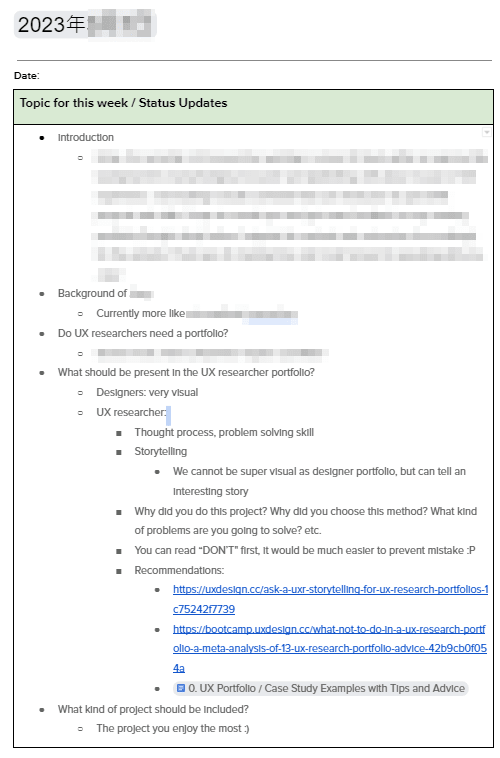
For reference, here’s a redacted snapshot from one of my session notes. You can see this mentee had prepared well and came with clear questions — the conversation had clear direction, and I could answer their questions and share resources in real time.
After the Session: Leave a Review
Every mentor on ADPList is giving their time freely, genuinely hoping to be helpful. A review — public or private — lets us know what landed and what didn’t. It’s encouraging, and it makes us better.
Afterword
Being a mentor on ADPList has been a genuinely rewarding experience. I treasure every session and learn things from mentees that I’d never encounter at work.
If you’re curious, whether you have a specific question or just want to talk through your career with someone who’s been through a similar transition — open ADPList and find someone to talk to.
I don’t have a fixed schedule right now, but if you want to connect, feel free to reach out and we can find a time:
https://adplist.org/mentors/iju-hsu
Hope this was useful. I’ll be collecting the most common UXR questions I’ve received and turning them into future posts.
Questions in the comments always welcome! 😊
Thanks for reading :D
If you enjoyed this post, feel free to click the coffee button in the lower right to support us and give Lottery a can 🐾
Comments