Biro, D., Humle, T., Koops, K., Sousa, C., Hayashi, M., & Matsuzawa, T. (2010). Chimpanzee mothers at Bossou, Guinea carry the mummified remains of their dead infants. Current Biology, 20(8), R351-R352.
Buschmann, C., Solarino, B., Püschel, K., Czubaiko, F., Heinze, S., & Tsokos, M. (2011). Post-mortem decapitation by domestic dogs: three case reports and review of the literature. Forensic science, medicine, and pathology, 7(4), 344-349.
Colard, T., Delannoy, Y., Naji, S., Gosset, D., Hartnett, K., & Bécart, A. (2015). Specific patterns of canine scavenging in indoor settings. Journal of forensic sciences, 60(2), 495-500.
Hernández-Carrasco, M., Pisani, J. M., Scarso-Giaconi, F., & Fonseca, G. M. (2016). Indoor postmortem mutilation by dogs: Confusion, contradictions, and needs from the perspective of the forensic veterinarian medicine. Journal of Veterinary Behavior, 15, 56-60.
Maksymowicz, K., Marycz, K., Czogała, J., & Jurek, T. (2011). Refutation of the stereotype of a “killer dog” in light of the behavioral interpretation of human corpses biting by domestic dogs. Journal of veterinary behavior, 6(1), 50-56.
Ropohl, D., Scheithauer, R., & Pollak, S. (1995). Postmortem injuries inflicted by domestic golden hamster: morphological aspects and evidence by DNA typing. Forensic science international, 72(2), 81-90.
Rothschild, M. A., & Schneider, V. (1997). On the temporal onset of postmortem animal scavenging:“motivation” of the animal. Forensic science international, 89(1-2), 57-64.
Smith, B. (2015). The dingo debate: origins, behaviour and conservation. Csiro Publishing.
Steadman, D. W., & Worne, H. (2007). Canine scavenging of human remains in an indoor setting. Forensic Science International, 173(1), 78-82.
Verzeletti, A., Cortellini, V., & Vassalini, M. (2010). Post-mortem injuries by a dog: a case report. Journal of forensic and legal medicine, 17(4), 216-219.
Cale, C. M. (2015). Forensic DNA evidence is not infallible. Nature News, 526(7575), 611.
Cale, C. M., Earll, M. E., Latham, K. E., & Bush, G. L. (2016). Could secondary DNA transfer falsely place someone at the scene of a crime?. Journal of forensic sciences, 61(1), 196-203.
Durdle, A., Verdon, T. J., Mitchell, R. J., & van Oorschot, R. A. (2018). Location of artifacts deposited by the blow fly Lucilia cuprina after feeding on human blood at simulated indoor crime scenes. Journal of forensic sciences, 63(4), 1261-1268.
Durdle, A., Mitchell, R. J., & van Oorschot, R. A. (2016). The food preferences of the blow fly Lucilia cuprina offered human blood, semen and saliva, and various nonhuman foods sources. Journal of forensic sciences, 61(1), 99-103.
Hussain, A., Zhang, M., Üçpunar, H. K., Svensson, T., Quillery, E., Gompel, N., … & Grunwald Kadow, I. C. (2016). Ionotropic chemosensory receptors mediate the taste and smell of polyamines. PLoS biology, 14(5), e1002454.
Bell, M. B. V., Cant, M. A., Borgeaud, C., Thavarajah, N., Samson, J., & Clutton-Brock, T. H. (2014). Suppressing subordinate reproduction provides benefits to dominants in cooperative societies of meerkats. Nature Communications, 5(1), 1-6.
Gómez, J. M., Verdú, M., González-Megías, A., & Méndez, M. (2016). The phylogenetic roots of human lethal violence. Nature, 538(7624), 233-237.
Perrtree, R. M., Sayigh, L. S., Williford, A., Bocconcelli, A., Curran, M. C., & Cox, T. M. (2016). First observed wild birth and acoustic record of a possible infanticide attempt on a common bottlenose dolphin (Tursiops truncatus). Mar Mamm Sci, 32(1), 376-385.
United Nations Office on Drugs and Crime, Vienna International Ctr, & Austria. (2011). Global Study on Homicide 2011.
世界最慘烈的叮咬
被蚊子咬已經夠痛苦了,更不用想像被蜜蜂咬。不過University of Arizona的昆蟲學家Justin Schmidt卻被昆蟲螫了超過千次,甚至還發明出像是品酒舨的「螫痛量表」--Schmidt pain scale,把痛苦分成四個等級。舉例來說,被紅馬蜂(red paper wasp)得3分,疼痛的感受:
Andersson, M., Backman, H., Nordberg, G., Hagenbjörk, A., Hedman, L., Eriksson, K., … & Rönmark, E. (2018). Early life swimming pool exposure and asthma onset in children–a case-control study. Environmental Health, 17(1), 34.
Lian, L., E, Y., Li, J., & Blatchley III, E. R. (2014). Volatile disinfection byproducts resulting from chlorination of uric acid: implications for swimming pools. Environmental science & technology, 48(6), 3210-3217.
有興趣的話大家可以去做University of Greenwich的心理學家Josh Davis提供的測驗,測測看你是不是「超級認臉人」。雖然沒有中文版,但英文非常簡單,我在做完測試後才發現自己其實沒有想像中地臉盲;也有朋友自認很會認人,沒想到一換成陌生人就輸得很慘XD
記得測完留言跟我們說一下你的分數XD 如果你的認臉能力很強,說不定也能加入「超級認臉人」的行列呢:P
p.s. 目前也有「超級認聲人」的研究,有興趣也可以做做看
Elbich, D. B., & Scherf, S. (2017). Beyond the FFA: brain-behavior correspondences in face recognition abilities. Neuroimage, 147, 409-422.
Russell, R., Duchaine, B., & Nakayama, K. (2009). Super-recognizers: People with extraordinary face recognition ability. Psychonomic bulletin & review, 16(2), 252-257.
Sacks, O. (2010). Face-Blind: Why are some of us terrible at recognizing faces?. New Yorker (New York, NY: 1925), 36-43.
White, D., Phillips, P. J., Hahn, C. A., Hill, M., & O’Toole, A. J. (2015). Perceptual expertise in forensic facial image comparison. Proceedings of the Royal Society B: Biological Sciences, 282(1814), 20151292.

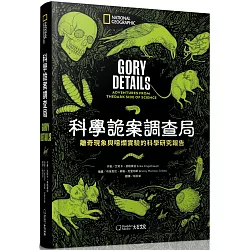 《科學詭案調查局》,Erika Engelhaupt,大石文化(圖片來源:博客來)
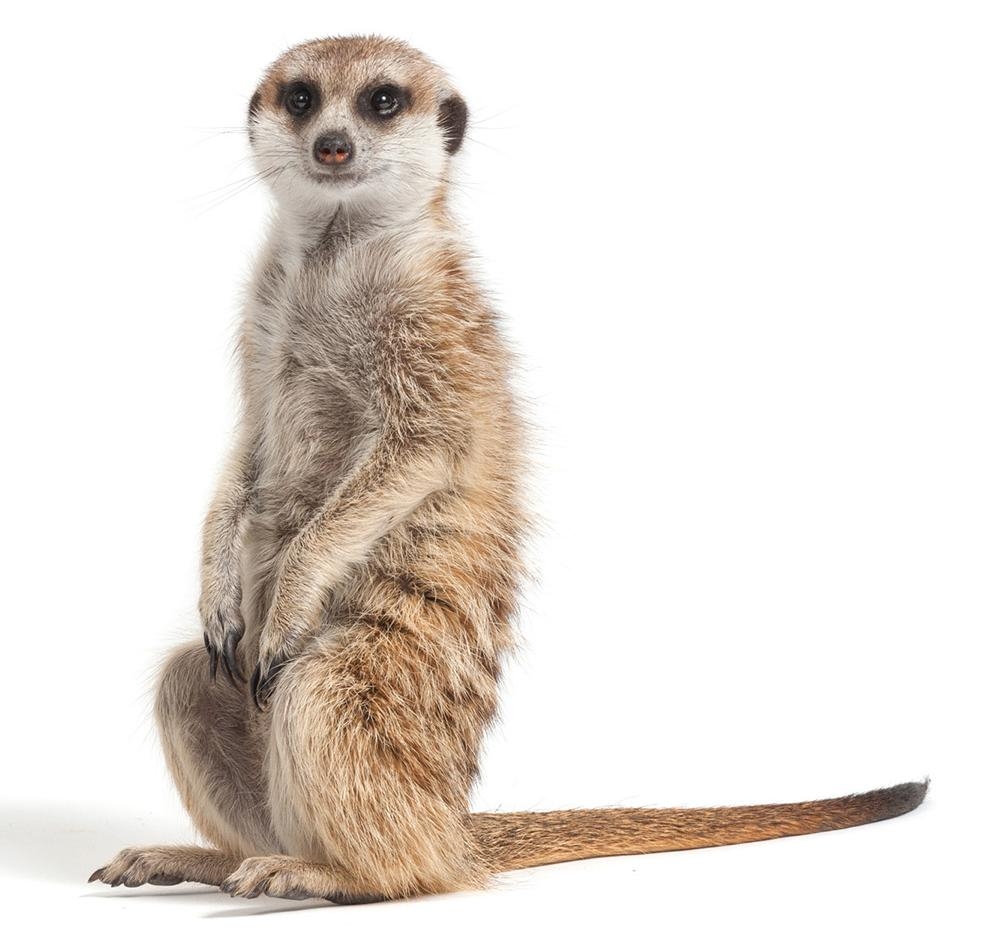 想得到居然是牠嗎!/狐獴,於非洲的哺乳類。(圖片取自:國家地理雜誌)



留言